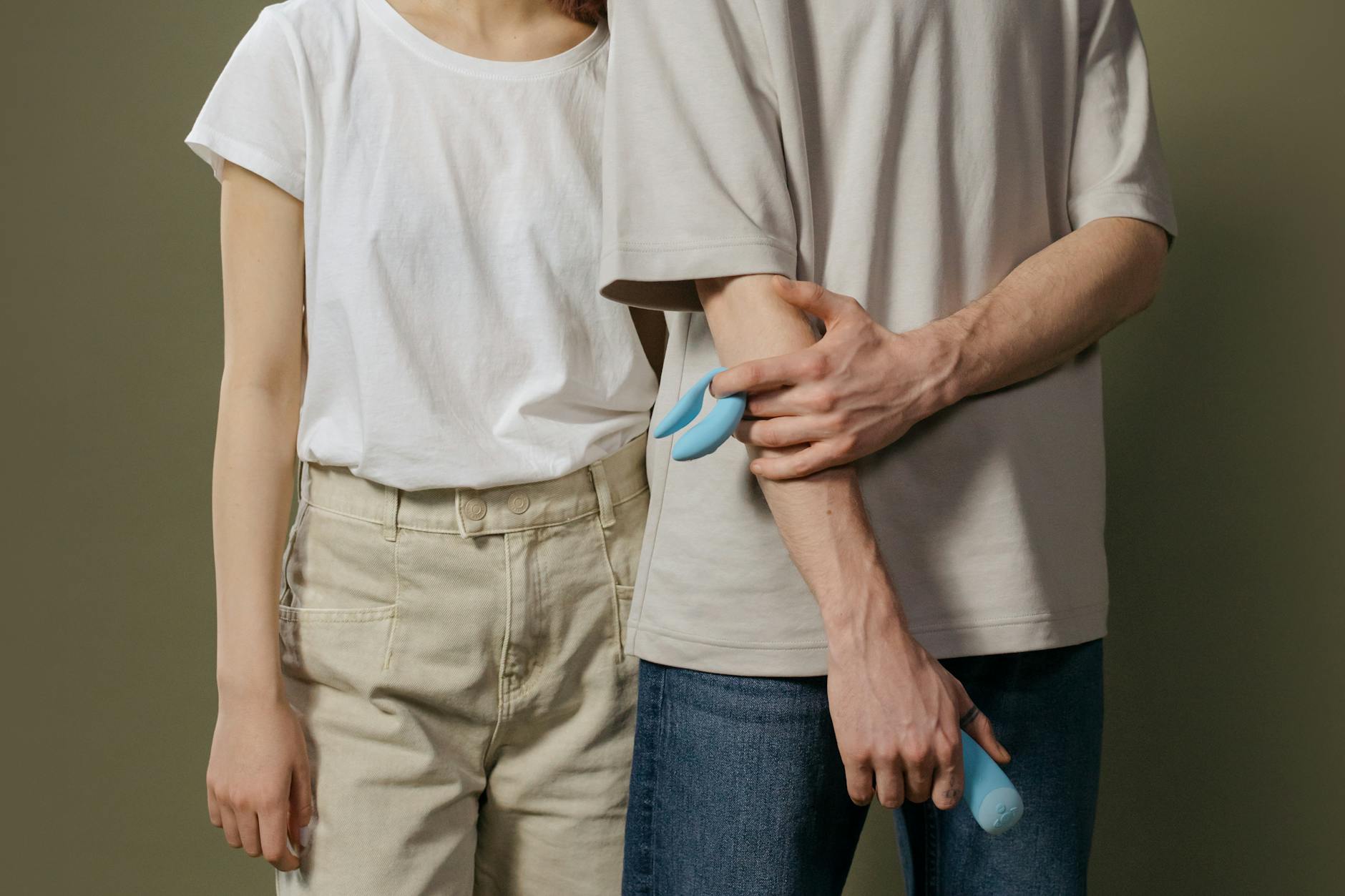
When anxiety kills arousal before it even starts
Let's be real. You want to feel turned on. Your partner wants to turn you on. But your nervous system is somewhere else entirely, running through a checklist of everything that could go wrong. Work deadlines. Money. Family drama. That thing you said three years ago. And suddenly, stimulation feels invasive rather than pleasurable. Touch feels like pressure. Desire feels like a fantasy that happens to other people.
This isn't a libido problem. It's a nervous system problem. And it's way more common than anyone talks about.
When chronic stress or anxiety is active, your sympathetic nervous system (the gas pedal) stays pressed down. Your parasympathetic system (the brake) can't fully engage. Arousal requires that brake to release. Pleasure requires safety. And right now, your body is convinced you're not safe. So lemon vibrators, and clitoral vibrators in general, become a tool not just for stimulation, but for resetting the nervous system itself.
How anxiety actually shuts down arousal
Your brain has one job when you're anxious: keep you alive. It doesn't care about pleasure. It cares about threat detection. When cortisol and adrenaline are flowing, blood flow redirects away from the genitals and toward your limbs (the old fight-or-flight response). Your vagina becomes dry. Your clitoris becomes less responsive. Your entire sexual response cycle gets downregulated.
This is biological. This is not your fault. And this is not permanent.
The problem is that most advice about "managing anxiety and sex" treats these as separate problems. Therapists tell you to meditate. Your partner tells you to relax. You tell yourself to just get over it. But what you actually need is a tool that works with your nervous system, not against it.
That's where lemon vibrators enter the picture.
Why suction-based lemon clitoral vibrators work differently for anxious arousal
Traditional vibrators trigger a different neural pathway than suction-based lemon adult toys. A regular vibrator is a stimulus you have to manage. It's happening to you. With a lemon vibrator like The Lem, the suction creates a consistent, gentle pulse that your nervous system can settle into. It's not aggressive. It doesn't demand anything. It just holds.
That holding sensation actually mirrors the vagal brake activation your nervous system needs. Your vagus nerve, the main parasympathetic highway, responds to gentle, consistent stimulation. Suction creates that kind of input without the intensity that anxious bodies often find alarming.
I've worked with clients who couldn't use traditional vibrators at all because the sensation felt too demanding. The moment it turned on, they'd tense up. But with a suction lemon vibrator, the experience is more like sustained attention rather than rapid-fire stimulation. Your nervous system can learn: this is safe. This is going somewhere. I can let go.
The nervous system reset: using lemon vibrators to practice parasympathetic activation
Here's the unexpected part: a lemon clitoral vibrator can become your nervous system coach.
When you use a lemon sucker in a low-pressure setting, especially when you're alone and there's no performance expectation, you're literally practicing the state you need to access. Your body learns what safety feels like. Your clitoris becomes more sensitive over time, not because the nerve endings change, but because your nervous system is paying attention again instead of running threat detection.
Start with this: set 15 minutes aside when you're not stressed. Not when you have 20 minutes before work. Not when your partner is waiting. Just you, a lemon vibrator, and no agenda. The goal isn't orgasm. The goal is presence. Lie down, take five deep breaths, and turn the device on at the lowest setting. If your mind wanders to your to-do list, that's fine. Just notice it and return to sensation.
This isn't meditation disguised as masturbation. It's nervous system recalibration. After a few sessions, something shifts. Your body starts to remember what ease feels like. And paradoxically, that's when desire often returns.
Partner sex when anxiety is in the room
If you have a partner, incorporating a lemon clitoral vibrator into partnered sex changes the dynamic entirely. Instead of your partner trying to arouse you (which adds pressure), the vibrator takes the lead on physical stimulation. Your partner can focus on what you actually need: presence, reassurance, and the freedom to take time.
Many couples find that starting with a lemon vibrator solo, and then introducing it together once you're comfortable, works better than jumping straight to partnered use. The solo practice builds confidence. You learn what settings work. You prove to your nervous system that pleasure is possible, even under stress.
When you do use a lemon sucker with a partner, communication changes. You're not waiting for them to generate arousal. You're not performing willingness. You're actually exploring sensation together. That's a fundamentally different conversation.
The anxiety-specific protocol
If you're dealing with diagnosed anxiety, generalized worry, or chronic stress, this approach works better than attempting typical arousal progressions:
Week 1-2: Solo practice, lowest setting. Five to ten minutes. No pressure for results. Just presence with the sensation. Your job is to notice, not to achieve.
Week 3-4: Extend time gradually. You'll probably feel arousal building faster now. Let it. But don't rush to orgasm. The practice is in allowing sustained pleasure without the narrative.
Week 5+: Introduce variation. Try different settings, different times of day, different positions. The variation teaches your nervous system that pleasure is robust and reliable, not fragile.
With a partner: Go solo first. Once you feel competent alone, bring the lemon vibrator into partnered sex. It's not a toy your partner uses on you. It's a tool you use together, which is a completely different power dynamic.
When to pair a lemon vibrator with actual anxiety treatment
Let's be clear: a lemon clitoral vibrator is not therapy. If you're struggling with clinical anxiety, panic attacks, or obsessive thought patterns, you need professional support. A lemon sucker is a useful complement to that work, not a replacement.
What happens often is that once you start practicing parasympathetic activation through solo use of a lemon vibrator, you feel more motivated to do the actual therapeutic work. Pleasure becomes possible again, which gives you something to protect and build on. Then therapy becomes the tool for managing the underlying anxiety, and the lemon vibrator becomes the tool for maintaining the nervous system state you're cultivating.
That combination, weirdly, is often more effective than either one alone.
The ripple effect: why this matters beyond sex
Using a lemon clitoral vibrator to reset your nervous system doesn't just improve sex. It improves sleep quality. It reduces overall tension. It teaches your body that you can access a parasympathetic state even when life is stressful. And that changes everything.
I've had clients tell me that the confidence they built through practicing pleasure with a lemon sucker actually transferred to other areas of their lives. They became better at saying no at work. They became more present with their kids. They slept through the night for the first time in years.
Your nervous system doesn't compartmentalize pleasure. Activation in one arena activates everywhere.
FAQ: Anxiety and lemon vibrators
Can a lemon vibrator actually help anxiety, or is that pseudoscience?
It's not the vibrator fixing anxiety. It's the parasympathetic activation. Suction-based clitoral vibrators create sustained, gentle stimulation that engages the vagal brake and signals safety to your nervous system. That's measurable. Paired with intentional breathing and no performance pressure, you're literally practicing the state your anxious body needs to learn. Over time, that practice transfers to other moments in your life.
What if I feel worse or more triggered when I use a lemon clitoral vibrator?
That's important information. Some bodies need more warmth, more control, or more external reassurance before internal stimulation feels safe. If a lemon sucker amplifies anxiety rather than easing it, try: starting with external-only contact (not insertion), using it with a partner present for safety, or exploring other approaches entirely. Your nervous system's "no" is valid. Respect it.
How long before I notice a shift in my arousal?
Most people notice a difference within 2-3 weeks of consistent solo practice. But "difference" might not be full arousal yet. It might be your clitoris becoming more sensitive, or you feeling less tense during the experience, or you being able to focus longer without your mind hijacking the moment. Those are wins. Full arousal reinstatement usually takes 4-6 weeks of regular practice, especially if your anxiety is chronic.
Is it normal to feel disconnected from pleasure even with a lemon vibrator?
Absolutely. Dissociation and anxiety often travel together. If you're noticing numbness even with a lemon clitoral vibrator, that's a signal to slow down further. Shorter sessions. Lower intensity. More breathing. And possibly a conversation with a therapist about what your body is protecting you from. The vibrator can't fix dissociation, but pairing it with professional support often can.
Can I use a lemon sucker if I'm on antidepressants or anti-anxiety medications?
Yes. Medications don't contraindicate using a lemon clitoral vibrator. In fact, many people find that once their medication stabilizes their nervous system, they can access arousal more easily with these tools. The vibrator and the medication are working on different levels. They complement each other.
What if my partner doesn't understand why I need a lemon vibrator to feel aroused?
That's a conversation about nervous system function, not a conversation about their adequacy. Explaining it this way often helps: "My anxiety is real, and my body's threat response is real. A clitoral vibrator doesn't replace you. It creates the conditions where I can actually show up for both of us." If they're still resistant, you might be looking at a larger relationship dynamic that needs attention beyond the bedroom.
Your nervous system deserves this
Anxiety is real. Desire isn't fragile. And the two can coexist if you give your nervous system what it actually needs. That's not fake. That's not settling. That's using the right tool for the actual problem you're facing. A lemon vibrator, used with intention and without pressure, is exactly that tool. Your body knows how to feel pleasure. Right now, it's just in protection mode. It's time to teach it safety again.
Ready to explore? Visit our buying guide to find the lemon clitoral vibrator that fits your needs, or reach out to our team at /contact if you want to talk through what might work best for your situation.