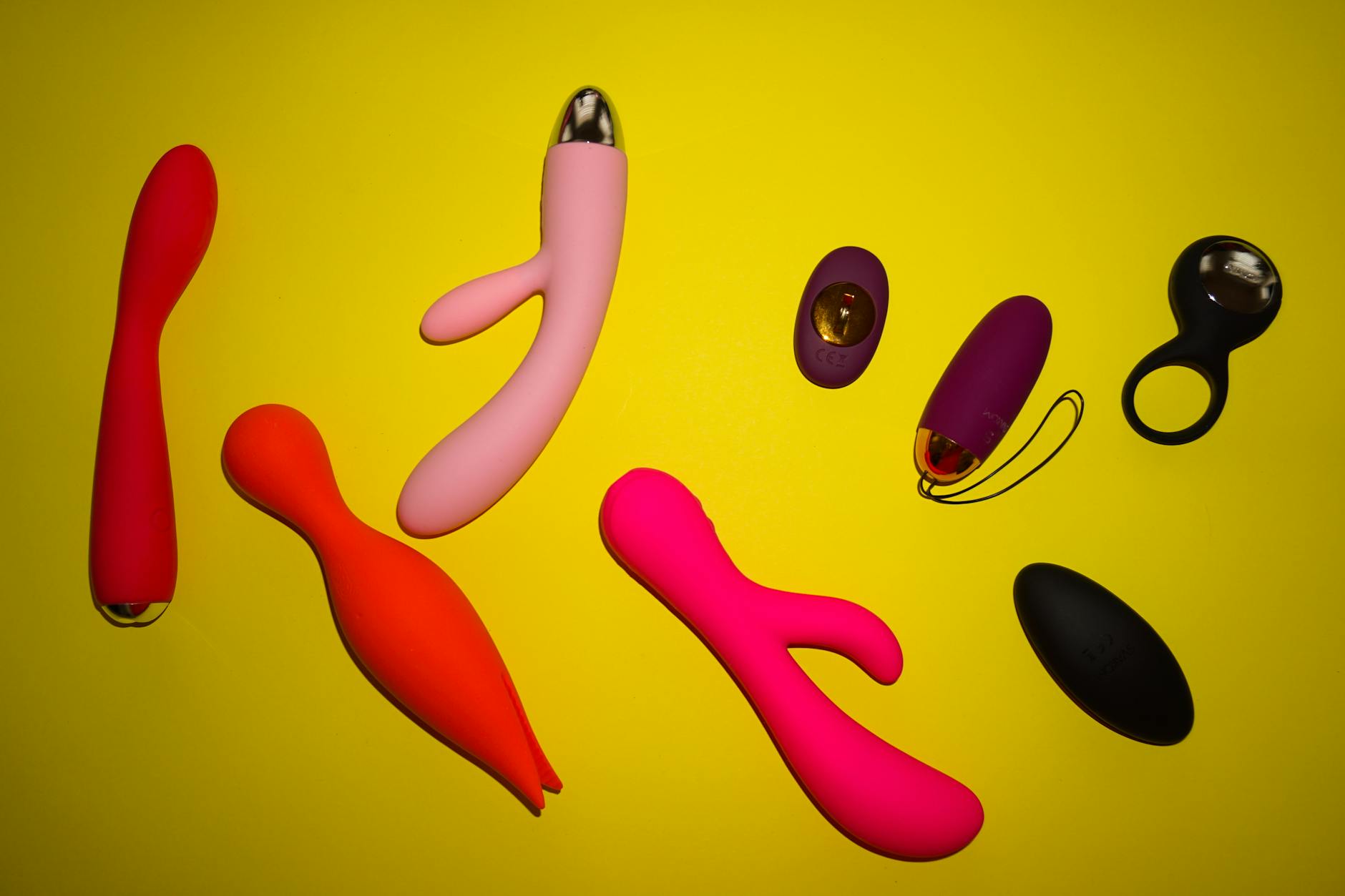
Let's name what's actually happening
Your partner doesn't want you to use toys. Or maybe they're worried toys mean they're not enough. Or they think wanting a lemon clitoral vibrator signals something wrong with your desire. Here's what I know from years of working with couples: this hesitation is almost never about the toy itself. It's about what they think the toy means about them, about you, or about the relationship.
The good news? That's fixable. And it doesn't require a dramatic conversation or convincing anyone they're wrong.
Why partners get nervous (the real reasons)
Most hesitation falls into three buckets, and each one responds to a different approach.
"You won't need me anymore." This is anxiety about replacement, not about lemon vibrators themselves. Your partner worries that if you experience pleasure with a toy, you'll prefer it to them. This fear often lives quietly in long-term relationships and surfaces only when toys enter the picture.
"Toys mean I'm not doing it right." Performance anxiety. They've internalized the idea that good partners should be able to satisfy you with fingers, bodies, and time alone. A clitoral vibrator or lemon sucker feels like a report card they're failing.
"I don't know what that is." Plain unfamiliarity. They've never seen a lemon vibrator or any clitoral toy up close. They imagine something clinical, extreme, or intimidating. The unknown feels safer to avoid than to explore.
None of these is actually about the toy. All of them respond to reassurance, education, and shared experience.
The conversation: what works and what doesn't
Here's what doesn't work: picking a moment, sitting down, and saying "I want to use toys." Even if you frame it gently, the framing itself reads as a proposal that needs agreement. It puts your partner in the position of gatekeeper. They either say yes (reluctantly) or no (with guilt).
What works instead is curiosity shared, not demand presented.
Start somewhere neutral. "I've been reading about how clitoral toys work differently than fingers, and I'm curious" is different from "I want to try toys." The first invites exploration. The second sounds like a decision you've already made.
Show, don't tell. If you have a lemon vibrator or other clitoral toy, leave it where your partner might find it. Not hidden, not presented formally. Just present. Let them sit with it. Many partners who are nervous about toys become curious once they've held one, felt the material, and realized it's not terrifying.
Introducing a lemon vibrator without the pressure
Once curiosity exists (even tiny curiosity), you have real options.
Option 1: Use it solo first, and tell them. "I tried that toy solo, and it felt completely different than what I expected. I'm kind of surprised." This does two things at once. It shows you're not asking them to perform something new. It also normalizes the toy by talking about it like you'd talk about anything else. Your comfort with it becomes contagious.
Option 2: Invite observation without participation. "I'm going to use this while we're together, but you don't have to do anything. Just be here." No performance. No participation. Just presence. Watching changes things. Nervousness often softens into curiosity once someone sees another person enjoying something.
Option 3: Position it as enhancement, not replacement. This is where context matters. "I want to try this during foreplay, while you're already here. Think of it as adding something, not replacing anything." This is true. A lemon clitoral vibrator doesn't replace fingers or bodies. It changes the sensation in ways fingers can't. That's not loss. It's addition.
What to say when they express doubt
If they say "I'm not sure I'm comfortable with that":
Resist the urge to reassure them immediately. That sounds like you're asking permission. Instead, say: "That makes sense. It's new. Let me show you what I'm talking about, no pressure." Then show them. Let them hold it. Let them see it's just silicone, just technology, just pleasure.
If they say "I feel like you don't want me anymore":
This one needs direct address. "That's not what's happening. I want more sensation sometimes, the same way you might want different music or different food sometimes. It's not about you. It's about what my body responds to." Then tell them something specific you love about how they touch you. Make it concrete. Make it recent. Make it true.
If they say "I don't know how to use it":
Perfect. You've found the real issue. "You don't have to use it. I can. Or I can show you how, and you can decide if you want to try." Then actually show them. Hands-on education works better than explanation.
The first time you use one together
Manage the moment carefully. Don't build it up. Don't make it a "thing." Introduce it during foreplay when you're already close, already connected, already touching.
Start with lower intensity. A lemon clitoral vibrator like the Lem has multiple patterns and intensity levels. Begin at pattern 1 or 2, not at maximum. Let your partner see it feels gentle, that you're still responsive, that you're still present with them.
Keep communication happening out loud. "That feels good" or "I'm enjoying this" gives them real-time feedback that you're not disappearing into the toy. You're still here. You're sharing this.
Try using it while they're touching you in other ways. This is powerful. A lemon suction vibrator stimulating your clitoris while they touch your breasts, your thighs, your neck anchors the experience in partnership. The toy isn't replacing them. It's working alongside them.
What happens after the first time
Most partners who were nervous become less nervous after they've actually experienced using a toy together. Seeing their partner's genuine pleasure is usually more persuasive than any conversation.
Some partners want to participate more actively. That's great. Others prefer to stay in a supporting role. Both are fine. There's no "right" way to use a lemon vibrator as a couple. There's only what feels good and connected to both of you.
If your partner remains uncomfortable, that's also information. Sometimes nervousness isn't about education or unfamiliarity. Sometimes it's about genuine incompatibility around this particular thing. In that case, you have a choice to make about what matters more: the toy or the relationship. Usually the relationship matters more. But that's a conversation for both of you to have clearly.
FAQ: Partner nerves and toys
Q: What if my partner refuses to even look at a toy?
A: That's a boundary worth respecting in the moment. But it's also worth understanding. Curiosity sometimes comes later when pressure is gone. I've seen couples where one partner needed six months of no-toy conversations before becoming open. Don't keep pushing. Instead, drop it completely for a while. Use toys only when alone. Let your comfort with them become normal, boring even. Mysteriously, that often softens resistance.
Q: Is it weird to use a lemon clitoral vibrator in front of my partner if they're nervous?
A: Not weird at all. Actually, it's one of the most effective ways to dissolve nervousness. Seeing something demystifies it. Seeing someone you love enjoying something normalizes it. Shame thrives in secrecy. Openness kills it.
Q: My partner wants to use the lemon vibrator, but I'm nervous now. What do I do?
A: Totally fair. You get to have feelings too. Tell them: "I'm not used to this yet. Let's go slow." Start with observation. Watch them use it. See that it's not threatening. Then gradually participate more if you want to. And read the guides on how lemon vibrators work so you understand what's actually happening physiologically. Knowledge makes things less scary.
Q: Should I introduce a toy to fix a dead bedroom?
A: No. Introducing a toy when a couple hasn't had sex in months usually makes things worse. Toys work best when there's already good sexual communication and regular intimacy. If you're in a dead bedroom, toys won't fix that. Couples counseling or a deeper conversation about what's actually wrong will. Once that's addressed, toys can be a fun next step. Not a Band-Aid.
Q: How do I know if my partner will actually enjoy using toys together?
A: You don't, until you try. But most people enjoy trying new things with partners they trust, as long as pressure is low and curiosity is genuine. The best setup is: "I'm interested in exploring this. Want to explore with me?" If they say yes, you're in good territory. If they say no, that's also valuable information.
Q: Is it normal to feel jealous watching my partner use a toy?
A: Completely normal. It's also usually temporary. That jealousy often comes from the same place as your partner's original nervousness: "What if this means they don't want me?" The answer is usually no. A toy is a tool, not a replacement. Once you've watched your partner enjoy using a lemon clitoral vibrator while you're present and connected, that jealousy often shifts into something closer to shared excitement.
The real thing underneath all this
Partner nervousness about toys isn't actually about toys. It's about safety, belonging, and whether pleasure in a relationship can be something you build together or whether it has to be defended separately.
When you introduce a lemon vibrator with patience and without pressure, you're not just adding a toy to your sex life. You're sending a message: "Your feelings matter. Your pace matters. And we can explore new things together safely." That message changes relationships. Not because of the toy itself, but because of what it means when one person prioritizes the other person's comfort while also honoring their own curiosity.
Start there. The toy will follow naturally.