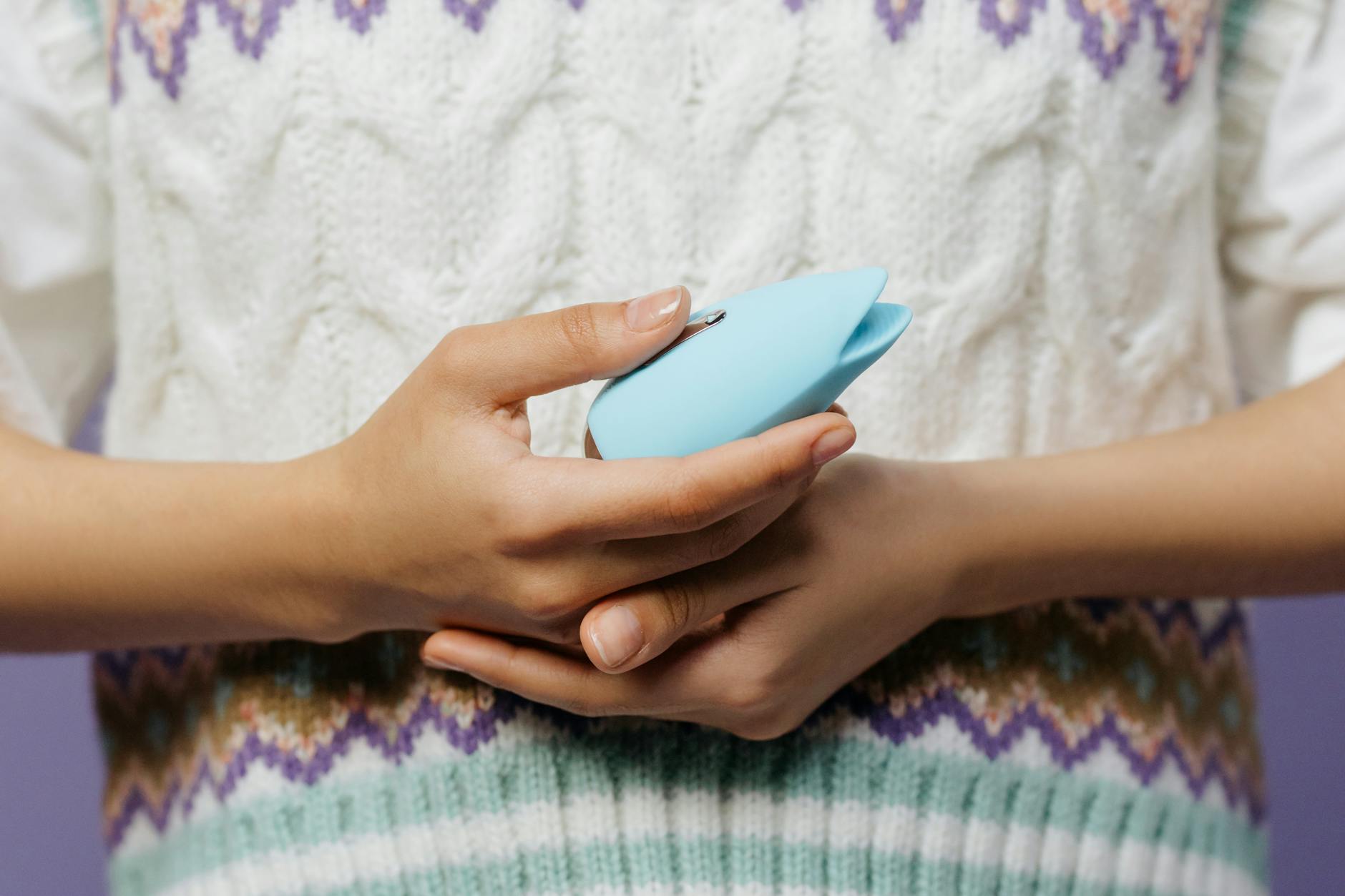
When your body doesn't feel like yours anymore
Let's be real. After major surgery, a serious illness, an accident, or even just a season of unbearable stress, your body can feel like borrowed property. Your skin doesn't recognize touch the way it used to. Your reflexes are slower. Pain lives in places you didn't know could hurt. And pleasure? It feels impossibly far away.
This isn't weakness or a sign that you're broken. It's actually your nervous system doing exactly what it's supposed to do. Trauma, recovery, and major transition all trigger a protective response. Your body literally walls itself off to help you survive the crisis. The problem is that your body often doesn't know the crisis is over.
The good news is that reconnecting with pleasure after your body has been through something major is absolutely possible. And lemon vibrators are one of the gentlest, most effective tools I recommend to help you get there.
Why lemon clitoral vibrators are different after major life changes
Most vibrators work through rhythmic repetition and often require sustained pressure. After your body has been through trauma, surgery, or serious illness, that kind of demand can feel threatening. Your nervous system reads intensity as risk.
Lemon vibrators work differently. They use gentle pulsing suction that creates sensation without requiring you to be in a particular position or to engage your pelvic floor in a specific way. This matters enormously when your relationship with your own body is still fragile.
Here's what I see most often with clients in recovery. The traditional vibrator feels too aggressive. It demands participation. A lemon vibrator from Hallo Nancy Lems, by contrast, invites your body to respond at its own pace. There's no pressure to perform, no complex choreography required. Just you and a sensation that's designed to feel safe.
Starting small when everything feels big
If you're using a lemon clitoral vibrator for the first time after a major transition, your first session isn't about reaching orgasm. It's about listening. That's the whole point.
Set aside 20 minutes when you won't be interrupted. You don't need privacy, exactly, but you need safety. A locked door matters if your nervous system has been on high alert. Sit or lie somewhere comfortable. You don't need to be nude if that feels exposing. Many people start with underwear on, or clothes entirely.
Start your lemon vibrator on the lowest setting. Most people are shocked by how much sensation even the gentlest pattern creates. Place it against your clitoral area through clothing if you want to. Notice what happens. Not whether it feels good. Just what happens. Does your breathing change? Does your mind wander? Does your body tense or relax?
This is data. You're teaching your nervous system that this touch is safe. That's the whole mission of session one.
Building the bridge between your mind and your body
After major life changes, your brain and your body often become strangers. Your brain says "we're safe now," but your body didn't get the memo. You might feel aroused mentally but completely numb physically. Or the opposite. This disconnect is so common it's almost universal.
Lemon vibrators help rebuild that bridge because they give your nervous system a very clear, safe signal. The suction sensation is precise enough that your body can't dismiss it as background noise. It's too specific. But it's gentle enough that your nervous system doesn't interpret it as a threat.
Use your lemon vibrator in sessions where your only job is to notice the sensation. Not to make something happen. Not to reach a destination. Just to be curious. What feels gentle? What feels like too much? Where do you want more sensation? Where do you want to stop?
Your answers will change. That's perfect. Your body is recalibrating. Honor it.
When pain shows up alongside pleasure
Sometimes after physical trauma or surgery, sensation and pain get tangled together. You might feel aroused but also uncomfortable. Or numbness in some areas and hypersensitivity in others. This is neurological, not psychological. Your nervous system is still processing what happened.
If you're experiencing pain when using a lemon vibrator, stop immediately. Pain is information. It's your body saying this isn't safe right now. That doesn't mean you never will. It means not yet.
Instead, try using your vibrator on areas further from the trauma site. Inner thighs, lower abdomen, the area above your pubic bone. Your nervous system needs to remember that touch can be safe. It doesn't have to start at the most vulnerable spot.
If persistent pain shows up during any sexual activity, talk to your doctor. Not because something is wrong with you, but because there might be a physical component to address. A pelvic floor physical therapist is wildly underrated for post-surgery recovery. They can help your body release protective tension that's outlived its usefulness.
The role of breath and nervous system regulation
Here's something nobody tells you about reconnecting with pleasure after major life changes. Your nervous system is in charge, not your mind. You can want something intellectually while your body stays locked down.
One of the most powerful things you can do while using a lemon vibrator is to pay attention to your breathing. Shallow breathing signals danger. Deep breathing signals safety. When you start your vibrator, notice what happens to your breath. Does it get shallower? Pause and take five deep breaths. Then resume.
This isn't spiritual or metaphorical. It's neuroscience. Your vagus nerve, which connects your brain to almost every other system in your body, directly influences your capacity for pleasure. Deep breathing activates it. Shallow breathing deactivates it. When you consciously shift your breathing, you're literally flipping a switch in your nervous system.
Many of my clients find that the first few sessions with their lemon vibrator are as much about conscious breathing as about sensation. And that's exactly right.
When to bring your partner into the picture
If you're in a relationship, your partner might be terrified to touch you after you've been through something major. They might feel like they're risking further harm. This fear is loving, and it's also often paralyzing.
Using a lemon vibrator together, or showing your partner what you've learned from using one alone, can help both of you reset. You get to demonstrate that your body is capable of pleasure and sensation. They get to see that you're reconnecting with yourself. This creates permission and safety for both of you.
You might start by using your vibrator while they're in the room, just present. No pressure for them to do anything. Gradually, you might invite them to hold you, or to use the vibrator on you if that feels comfortable. The key is that you remain in charge. You set the pace. You decide what feels safe.
Timing and consistency matter more than intensity
After major life changes, your nervous system thrives on predictability. Using your lemon vibrator at the same time each day, even if it's just for 10 minutes, tells your body that this is a safe ritual. Not a performance. A ritual.
I recommend starting with three times a week. Same time if possible. Same comfortable spot. This consistency does something remarkable. Your body starts to anticipate it. Your nervous system knows what's coming and begins to relax in advance.
Skip the marathon sessions. Five focused minutes beats 45 minutes of distracted use. Your goal isn't to wear yourself out. It's to rebuild the conversation between your mind and your body.
The long game: reconnection as self-compassion
Major life changes are about loss. Loss of the body you knew, the life you planned, the person you were before. Reconnecting with pleasure isn't trivial. It's an act of radical self-compassion.
Using a lemon vibrator after trauma, surgery, or serious illness is a way of saying to your body: "I see that you've been through something. I'm not asking you to go back to who you were. I'm inviting you to meet me where we are now."
That invitation might take weeks. Or months. Or longer. There's no timeline. But every session you have, you're teaching your nervous system that pleasure is possible again. Not the pleasure you used to know. Something new. Something that belongs to who you are now.
For many people, that turns out to be deeper than it ever was before.
FAQ: Using lemon vibrators after major life changes
How long does it usually take to feel something again?
It's wildly individual. Some people feel sensation in the first session. Others need two to three weeks of consistent use before their nervous system lets down its guard. The key is to stop measuring progress against a timeline. You're not trying to get somewhere fast. You're trying to get somewhere real. If you're not feeling anything after a month of regular use, consider talking to a therapist who specializes in somatic experiencing. Sometimes the disconnect runs deeper than a vibrator can address alone, and that's okay.
Can I use a lemon vibrator if I still have physical pain from surgery or injury?
It depends on the type of pain and where it is. If the pain is at the surgical site itself, I'd recommend waiting until your doctor clears you for sexual activity. If the pain is elsewhere, or if it's more of a nervous system hypersensitivity than a physical wound issue, you can absolutely explore using your vibrator on less sensitive areas first. Your body will tell you what's safe. Listen to it.
What if my partner doesn't understand why I need to use a lemon vibrator to reconnect with pleasure?
This is a conversation worth having, and it's not always easy. Try explaining it this way: your nervous system is still in protection mode. Using a vibrator isn't about replacing your partner. It's about teaching your body that touch is safe again. Many partners find that once they understand this, they actually want to support the process. If your partner continues to resist, that might point to a deeper relationship issue worth exploring with a couples therapist.
Is it normal to feel emotional while using a lemon vibrator after major life changes?
Completely normal. Your body might release old tension as a part of coming back online. You might cry. You might feel angry or sad. These are all signals that your nervous system is processing something. Let it happen. Tissues and maybe a moment alone after are all you need. This emotional release is actually a good sign that something is shifting.
Should I tell my doctor I'm using a lemon vibrator as part of my recovery?
If you're still in active recovery from surgery or serious illness, mentioning it to your doctor gives them full information about your physical activity level. They might have specific recommendations. Most doctors are very aware that sexual wellness is part of overall wellness and will support your reconnection efforts. If they seem judgmental, that says something about them, not about you.
How do I know if I'm ready to move to a more intense vibrator or to add partnered activity?
Your body will tell you. If you're consistently reaching orgasm, if you're not experiencing pain, and if you're feeling more connected to your own pleasure, you're ready to explore. There's no rush to escalate. Many people find that their relationship with lemon clitoral vibrators deepens over time, and they never feel the need to change. Your pleasure doesn't have to look like anyone else's.
Getting started
Your body has been through something. It's okay if it feels unfamiliar. What matters now is rebuilding the relationship with it. A lemon vibrator from Hallo Nancy Lems is a tool for that rebuilding. It's not a solution to the deeper psychological or physical work you might need to do. But it's a way of signaling to your nervous system that pleasure is part of your recovery.
Start small. Be patient. Listen to your body. And know that what you're doing right now, reconnecting with your own pleasure after major life changes, is genuinely brave. Your body will thank you for it.