How to Use Lemon Vibrators When You Want Intense Orgasms But Struggle With Overstimulation
Let's be real. You want to feel everything. And sometimes you do. Then your body just shuts down. The nerves go numb, the sensation flattens, and suddenly the most stimulating thing in the world becomes completely unresponsive. Welcome to overstimulation. It's not a myth. It's a protective response your nervous system deploys when things have gotten too intense too fast.
Here's the thing: overstimulation isn't a sign you're doing it wrong. It's feedback. And once you understand what's actually happening physiologically, you can work with your body instead of against it.
The good news? Lemon vibrators, especially air-suction models, work differently than traditional vibrators. They're actually built for people who experience overstimulation.
What overstimulation actually is
Your clitoris has roughly 8,000 nerve endings packed into a tiny space. When stimulation is too intense, too fast, or goes on for too long without a break, those nerves basically hit mute. It's not permanent. It's not damage. It's your nervous system saying "okay, we need to dial this back."
Physiologically, here's what happens. Sustained high-intensity stimulation can desensitize the mechanoreceptors in your vulva. These are the nerve endings that detect pressure and movement. After enough bombardment, they stop firing as reliably. Your brain stops receiving the same signal strength. The sensation flattens. Sometimes it actually starts to feel uncomfortable or numb.
This is why many people describe overstimulation as feeling stuck just below the edge of orgasm, unable to tip over, or feeling pain where pleasure used to be.
Why lemon vibrators (and suction specifically) are different
Traditional vibrators rely on repeated oscillation at a fixed frequency. They're great, but if you're sensitive, that constant rhythm can push you into overstimulation territory faster than you'd like.
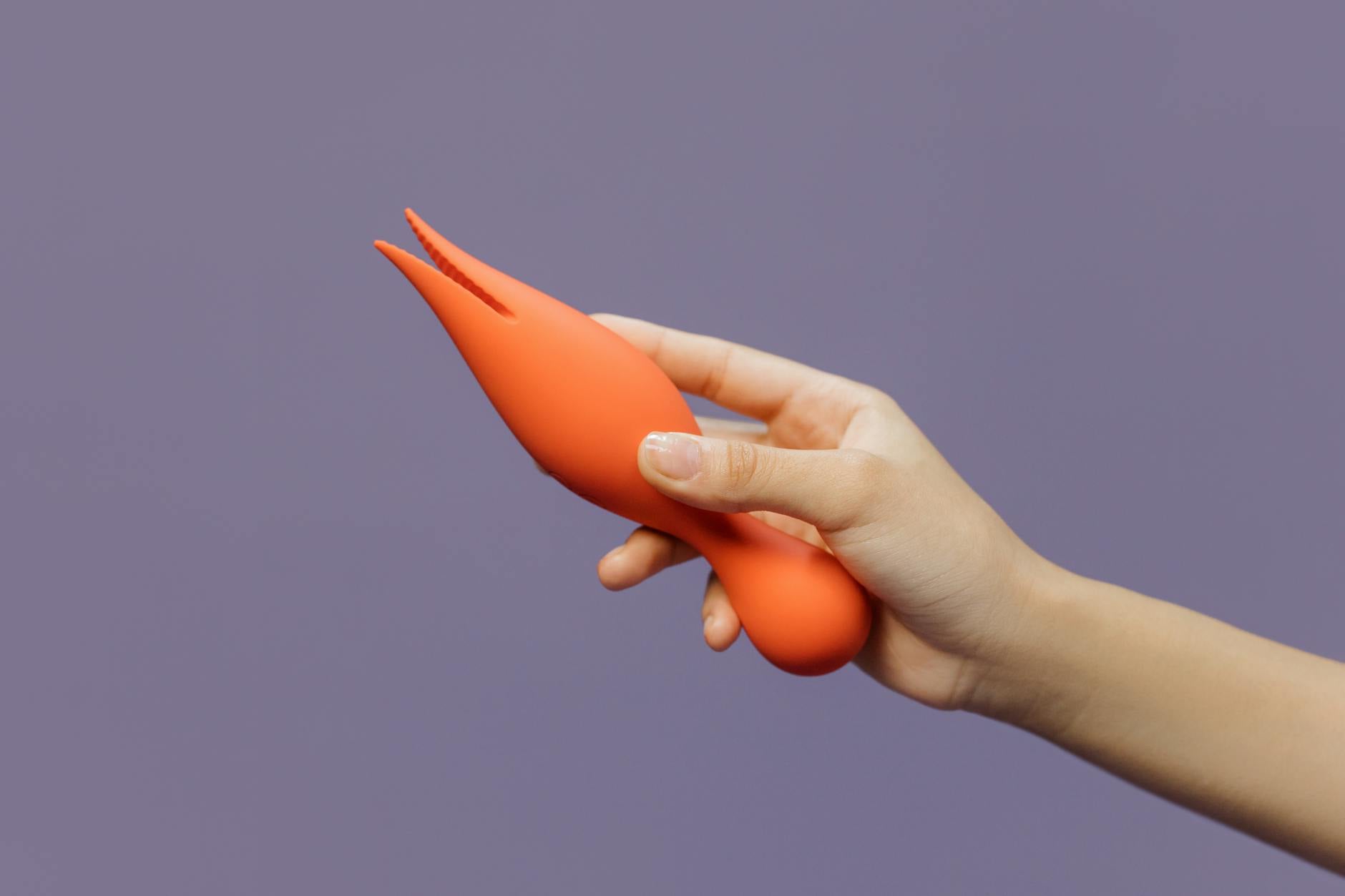
Lemon clitoral vibrators like the Lem use air-suction technology. Instead of vibrating against the tissue, they create a gentle pulsing suction that stimulates the entire clitoral network, not just the surface nerve endings. The sensation is different. It's more diffuse, which means the intensity is distributed across a wider area of nerve endings rather than concentrated on one spot.
For people who struggle with overstimulation, this matters enormously. You get intense sensation without the same risk of flooding those 8,000 nerve endings all at once.
The pacing framework that prevents overstimulation
Intense orgasms don't require non-stop maximum stimulation. In fact, the opposite is often true. Here's how to build intensity while protecting yourself from that flattened, numb feeling.
Start at pattern 1 or 2 for the first 3-5 minutes. I know this sounds slow. It's not. You're warming up your nervous system and letting arousal build gradually. This priming phase is where you're most likely to avoid overstimulation later because you're not starting from zero intensity and cranking to nine.
Increase intensity in small steps. Move from pattern 2 to 3, then to 4. Spend 1-2 minutes at each level. This gives your nervous system time to adjust without shocking it. If you feel sensation starting to flatten or go a bit numb, backtrack one level and stay there for another minute.
Use pauses, not continuous stimulation. This is crucial. After 5-7 minutes of continuous use, pull away for 20-30 seconds. Let the sensation reset. This break prevents the nerve endings from becoming desensitized. You'll actually feel more intensely when you resume.
Peak frequency matters more than constant use. Five minutes of focused, interrupted stimulation at pattern 4 will often produce a more intense orgasm than 15 minutes of straight high-intensity use. Quality over duration.
Reading your body's overstimulation signals
Learn to spot the early warning signs before sensation disappears entirely. You want to catch overstimulation starting, not after you're already numb.
These are the signals your body is approaching a limit:
- The sensation starts to feel more painful than pleasurable, even though nothing has changed
- Your clitoris feels raw or tender to the touch (not normal sensitivity, but genuinely uncomfortable)
- You notice numbness or a "pins and needles" feeling developing
- The sensation suddenly feels thinner or less precise, like it's coming through a filter
- Your arousal plateaus and won't rise anymore, even though stimulation continues
When you notice any of these, stop immediately. Not because something is wrong, but because your nervous system is telling you it needs a reset. Take a 5-10 minute break. Breathe. Maybe move your body or change position. Then when you resume, start back at a lower intensity level.
Strategic breaks as part of your pleasure routine
Overstimulation recovery isn't failure. It's a feature of sustainable pleasure. The break itself becomes part of the experience.
Use these breaks to shift focus. If you've been using a lemon clitoral vibrator on your clitoris, try touching your breasts, your neck, or your thighs during the break. This redirects sensation to different nerve pathways and keeps arousal high without taxing the same sensitive area.
Alternatively, use breaks to build mental intensity. Fantasy, dirty talk, or internal focus can deepen arousal without physical overstimulation. Many people find that a 3-minute break featuring fantasy creates more powerful sensations when they resume direct stimulation.
If you have a partner, breaks are when they can touch you differently. Soft kissing, caressing, or penetrative touch can maintain arousal and intimacy while giving your clitoris time to reset.
The nuance of partner play with overstimulation
Let your partner know upfront that breaks and intensity shifts aren't rejection or a problem to solve. Frame it as "I want to feel more, not faster." Many partners interpret slower pacing as disinterest. It's actually the opposite.
If you're using a lemon vibrator with a partner present, they can help with the breaks. They can apply pressure elsewhere on your body, provide mental engagement, or simply give you permission to pause without explanation. This shared awareness actually deepens intimacy because you're not hiding what you need.
Recovery after orgasm (preventing post-orgasm overstimulation)
The overstimulation risk doesn't stop at orgasm. Many people experience a sensitivity crash right after, where the clitoris becomes almost painfully sensitive to touch. This is normal, but you can minimize it.
After orgasm, immediately remove direct stimulation. Let the lemon vibrator rest against your body without suction, or pull it away entirely. If you have a partner, tell them "no touch" or "very gentle only" for the next 1-2 minutes. This gives your nervous system time to recalibrate.
During this window, focus on breathing, grounding, and enjoying the afterglow. Move your attention away from your genitals. This prevents the sensitivity crash from happening at all.
Some people experience multiple orgasms easily. Others find that a single orgasm followed by overstimulation recovery is their rhythm. Both are completely normal. Work with your own nervous system, not against it.
When intensity builds into pain instead of pleasure
Sometimes overstimulation doesn't feel like numbness. It feels like sharp, raw pain or an almost stinging sensation. This is your body's way of saying "stop, I'm overwhelmed."
The difference between intense pleasure and painful overstimulation is subtle and personal. Generally, pain that doesn't ease after you stop stimulation or intensifies during pleasure needs attention. This could be a sign of sensitivity changes throughout your cycle, hormonal fluctuations, or conditions like vulvodynia.
If pain is consistent, talk to a gynecologist. If it's occasional and tied to overstimulation, the pacing framework above will help. But don't tough through genuine pain. Your pleasure shouldn't hurt.
The solo versus partner difference
When you're alone, you have total control over pacing and intensity. You can pause without explaining, you can backtrack, you can rest as long as you need. This is the ideal scenario for learning your overstimulation threshold.
With a partner, there's often a layer of performance pressure that makes breaks feel awkward. You might push through numbness to "finish" or feel pressure to keep going when you need to pause. This is where communication becomes crucial.
Tell your partner before you start: "Sometimes I need to pause to feel more, not less. This is normal and it's part of how my body works best." Frame overstimulation recovery as an enhancement to pleasure, not a limitation of it. Many couples find that strategic breaks actually lead to longer, more satisfying sessions because you're working with the body instead of against it.
FAQ: Overstimulation and intensity
How long should I wait between uses if I'm experiencing overstimulation?
You can use a lemon vibrator again after 24 hours if you've experienced overstimulation. Your nerve endings recover relatively quickly. If numbness is lingering beyond a few hours, take 48 hours before your next session. If it's persistent, consult a healthcare provider. Most overstimulation sensitivity resets within an hour or two of stopping stimulation.
Can overstimulation cause permanent damage to sensation?
No. Overstimulation is temporary desensitization, not nerve damage. Your sensation will return. It might take a few hours or a day, but it always comes back. The only permanent desensitization would come from actual physical injury, which vibrator use doesn't typically cause.
Is it normal to need longer breaks as I get older?
Yes. As estrogen levels change, particularly in the years around perimenopause and menopause, tissue sensitivity can shift. Some people find they need longer warm-up periods and more frequent breaks. This isn't a sign that something is broken. It's just your body asking for a different pacing. Clitoral sensitivity changes throughout your cycle, and that includes longer-term hormonal shifts.
Does the Lem prevent overstimulation better than other vibrators?
The Lem's air-suction technology distributes sensation across a larger area, which does reduce the risk of overstimulation compared to vibrators that concentrate intense oscillation on a small point. But overstimulation is still possible with any toy if pacing isn't managed. The Lem makes pacing easier because the sensation itself is gentler and more diffuse.
What's the difference between overstimulation and just needing a break?
Needing a break is a normal part of pleasure. You pause, you rest, you resume. Overstimulation is when sensation becomes uncomfortable, numb, or painful despite your desire to continue. It's your nervous system hitting a wall, not just needing a moment. If you pause and immediately want to resume at the same intensity, you just needed a break. If you pause and the sensation feels flat or painful when you try again, that's overstimulation.
Can I use patterns to manage overstimulation instead of pausing?
Yes. Switching from pattern 5 to pattern 2 is essentially giving your clitoris a break while maintaining sensation. Many people prefer this to stopping entirely because it keeps arousal high. Experiment with intensity downshifting as your primary overstimulation management tool.
The bottom line
Intense pleasure and overstimulation aren't opposites. They're actually connected. The more you understand your threshold and respect your nervous system's pacing, the more intense and sustainable your orgasms become. Lemon vibrators, especially air-suction models, give you the tool to explore this safely. Your body knows what it needs. Your job is to listen.
Ready to explore your pleasure without the crash? Start with a lower intensity level than you think you need, take more breaks than feel necessary, and pay attention to what feels good versus what feels like pressure. That's not deprivation. That's optimization.
If you're navigating overstimulation as part of a bigger intimacy challenge with a partner, we're here to help. Get in touch and let's talk through what's actually going on.