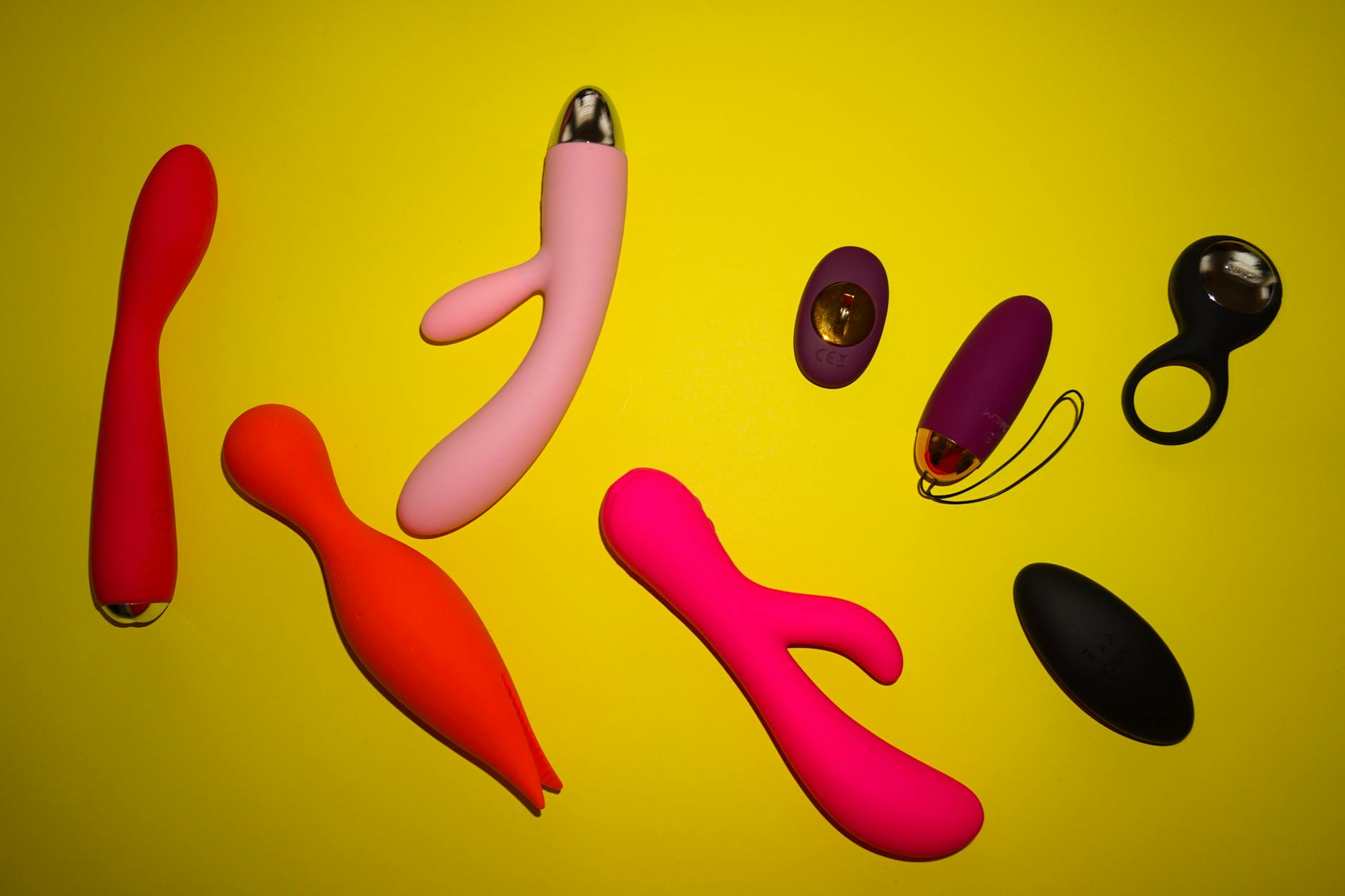
When touch feels like too much
Here's the thing: touch avoidance shows up quietly. One day you're fine with a hug, and the next, your partner's hand on your arm makes your nervous system say no. It happens after trauma, after prolonged stress, after feeling unsafe in your own body. It happens after feeling touched out from parenting. After grief. After being touched when you didn't want to be.
The hard part isn't that pleasure disappears. The hard part is rebuilding trust with your own body while your body's threat alarm is running hot.
This is where lemon vibrators become genuinely useful, not as a workaround but as a tool you control completely. You set the pace. You choose the intensity. You decide when it stops.
Why solo tools work when touch feels threatening
Touch avoidance happens in your nervous system, not in your desire. Your brain has learned that sensation from another person equals danger or overwhelm. A lemon clitoral vibrator removes the relational component. There's no uncertainty, no need to manage someone else's feelings, no surprise. It's just you, your body, and a tool you're completely in charge of.
This matters neurologically. When you use a lemon sucker or other clitoral vibrator on your own terms, you're literally rewiring your threat response. You're teaching your body that sensation can be safe, pleasurable, and entirely within your control. Researchers call this interoception work, and it's foundational to healing touch avoidance.
Most people expect pleasure to return the way it left: suddenly, completely, like flipping a switch. It doesn't. It comes back in stages. Solo exploration with lemon sexual toys is stage one.
Starting with sensation, not pleasure
The goal isn't orgasm. This is critical. If you're coming back from touch avoidance, putting orgasm pressure on yourself will backfire spectacularly. Instead, the goal is simply noticing sensation without judgment.
Start with your lemon vibrator on the lowest setting, but don't use it yet. Just hold it. Feel the weight. Press it against your arm, your leg, somewhere that feels safe and distant from your genitals. Let your nervous system get bored with it. The goal is for your body to register it as a thing, not a threat.
The next day, or whenever you feel ready, press it gently to your inner thigh. Again, lowest setting. Notice what happens. No performance, no goal. Just information gathering.
This might sound glacially slow. It is. It's also the pathway back to pleasure that actually works. Trying to jump to full sensation before your nervous system is ready is like slamming on the gas while your car's engine is still cold. It just stalls.
Building tolerance gradually with clitoral vibrators
Once your body registers the lemon vibrator as safe (this might take a week, might take a month), you can move closer. Direct clitoral stimulation is where lemon clitoral vibrators shine, but not yet.
Try stimulating the area around the clitoris, the inner labia, the perineum. Use a water-based lubricant. The combination of a slow speed, the suction-style sensation that makes lemon suckers unique, and your complete control over timing creates a low-pressure entry point back into sensation.
They're right when they say lemon vibrators work differently. The pulsing suction motion mimics the kind of indirect stimulation that often feels less intense than traditional vibration. It's gentler, more rhythmic, easier to pause and restart. For someone rebuilding a relationship with their own touch, that matters.
If you feel triggered, you stop. No explanation needed. Just stop.
The timeline is yours, not anyone else's
I'll say this plainly: if you have a partner, they need to understand that reconnecting with pleasure after touch avoidance isn't about them. It's not a referendum on the relationship or how attractive you find them. It's your nervous system healing.
This is the moment to have the conversation that most couples skip. Not during arousal, not during failure. When you're both calm and clothed, tell them what you need: space to explore solo, no pressure to transition to partnered touch on a timeline, permission to stop without justifying.
The best partners will understand that watching you reconnect with your own pleasure, even alone, is a form of intimacy. It means you're trusting yourself again. It means you're believing pleasure is possible for you.
When to involve a partner (and how)
Eventually, if you want partnered touch, the pathway back is through what feels safe. That might start with your partner simply being in the room while you use your lemon vibrator. Clothed. Quiet. Just present.
Then, it might be their hand resting on your leg while you use your lemon sucker solo. Then, their hand replacing yours on the vibrator. Then, their mouth.
Each transition is its own decision. Each one requires you to check in with your body and ask: is this safe? You might discover some touch will never feel safe again, and that's information worth knowing. You might discover that pleasure with a partner is possible again, just different than it was.
If you're rebuilding after a specific betrayal or violation, work with a trauma-informed therapist alongside this solo exploration. The vibrator is a tool, not a treatment. It complements therapy; it doesn't replace it.
Troubleshooting common setbacks
You'll have days when even the lemon vibrator feels like too much. That's not failure. That's your nervous system doing its job, which is protecting you.
On those days, try using the vibrator over clothing. Or just hold it without turning it on. Or skip it entirely. Rebuilding comfort with sensation isn't linear. Some weeks you'll move forward; some weeks you'll recalibrate.
If dissociation happens (you zone out, lose track of time, feel numb), stop and come back later. Dissociation means your body needed to escape, which means you pushed too far or too fast. Adjust. Go slower. There's no timeline.
If pain appears, stop completely and see a pelvic floor physical therapist who specializes in trauma. Pain isn't information you should ignore.
What to know about lemon clitoral vibrators specifically
The lemon vibrator's design matters here. The soft silicone, the gentle suction simulation, the rumbly vibration (not buzzy) all make it less likely to feel overwhelming compared to traditional vibrators. Most people describe it as more like touch, less like machinery.
This is genuinely useful feedback for touch avoidance recovery. You want a tool that simulates human sensation loosely, not perfectly. A lemon vibrator sits in that sweet spot.
The quiet operation also matters if noise anxiety is part of your picture. Many people who've experienced touch avoidance also have hypervigilance around other sensations, including unexpected sounds. A quiet tool means you're not adding another layer of threat.
The goal isn't to rush back to normal
Here's what I tell couples in my practice: touch avoidance isn't a detour to your old relationship. It's a fork. You don't get to "normal" again because normal included whatever created the avoidance.
What you get is a chance to build something more intentional. Using lemon vibrators, or any solo tool, during this phase isn't avoiding your relationship. It's rebuilding your capacity for intimacy by starting with the one person whose consent and comfort you can absolutely guarantee: yourself.
The pleasure that comes back isn't a return to the past. It's something you get to create new.
Questions people actually ask
How long does it take to feel comfortable with sensation again?
There's no standard timeline. Some people move through this in weeks; others take months or years. What matters is that you're moving, not that you're moving fast. Your nervous system heals on its own schedule, not anyone else's. Check in with yourself every few weeks about what feels different, even if the change is small.
Can I use a lemon vibrator if penetration triggers me?
Yes. External clitoral stimulation with a lemon sucker or similar tool doesn't require any penetration. It's entirely possible to rebuild pleasure and even have orgasms without ever involving penetration. Some people find that after healing, they never want penetration again. That's completely valid.
What if I feel nothing, even on the lowest setting?
Numbing or anhedonia is common with touch avoidance. Your nervous system has literally dampened sensation to protect you. This doesn't mean sensation is gone; it means you might need even more time. Try focusing on other sensations first: temperature, pressure, rhythm. Pleasure might return later. Sensation returning first, without pleasure, is normal and enough.
Should I tell my partner I'm using a vibrator during this healing phase?
I'd say yes, but in a specific way. Frame it as part of your recovery: "I'm working on rebuilding comfort with my body, and this tool helps me practice in a way I control completely. This is about me healing, not about our relationship." A partner worth keeping will get that.
What if my partner wants to join before I'm ready?
This is where you need to be clear: "I'm not ready for shared touch yet. I need more time exploring alone. I'll let you know when I'm interested in trying partnered touch again." If they push, that's a separate problem worth addressing, possibly with a couples therapist.
Can lemon vibrators help with penetration anxiety if I eventually want to try again?
Partially. Using a lemon clitoral vibrator can help you feel more aroused and relaxed, which reduces anxiety about penetration. But penetration anxiety itself might need specific work with a pelvic floor physical therapist or sex therapist. Think of the vibrator as one piece of rebuilding, not the whole picture.
Starting is the hardest part
If you're reading this because touch avoidance is real for you right now, here's what I want you to know: this isn't permanent. Your body isn't broken. You didn't lose the capacity for pleasure.
You're just rebuilding it more carefully this time, and that's actually better. When you come back to pleasure on your own terms, with tools like lemon vibrators that you control completely, that pleasure means something different. It's yours in a way it might never have been before.
Start small. Start alone. Let your nervous system set the pace. Your body will tell you when it's ready for more.
Sources and further reading
Van der Kolk, B. (2014). The Body Keeps the Score: Brain, Mind, and Body in the Healing of Trauma. Penguin Books.
Porges, S. W. (2011). The Polyvagal Theory: Neurophysiological Foundations of Emotions, Attachment, Communication, and Self-regulation. W.W. Norton & Company.
Brotto, L. A., & Basson, R. (2014). Group cognitive behavioural therapy for women with persistent genital arousal disorder: A case series. Journal of Sexual Medicine, 10(10), 2706-2717.
Gottman, J. M., & Silver, N. (2015). The Seven Principles for Making Marriage Work. Harmony.