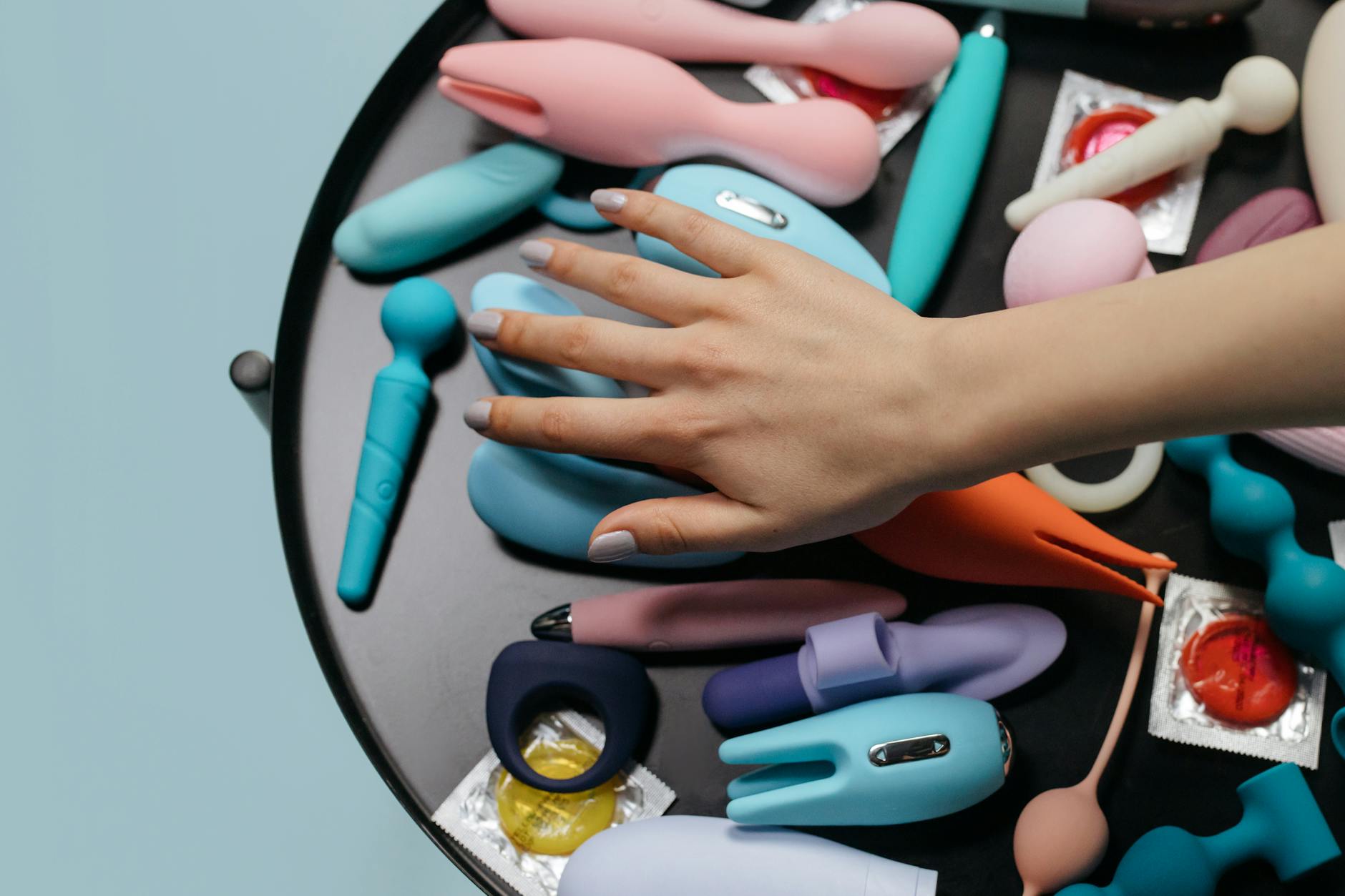
Let's talk about intensity mismatch in bed
Most couples don't discuss pleasure preferences until there's friction. One partner reaches for a vibrator and immediately cranks it to setting five. The other flinches. Cue awkward silence, a quick apology, maybe an uncomfortable laugh. Then nothing changes.
Here's the thing. Intensity preference isn't a personality flaw or a sign of mismatched desire. It's a sensory difference as real and individual as taste in food. And when you're sharing pleasure with someone else, that difference matters.
Why intensity preferences clash (it's not what you think)
There are a few reasons partners end up on opposite ends of the intensity spectrum. The most obvious: one person's nervous system is simply more sensitive. If you have a lower vibration threshold, strong sensation can feel overwhelming rather than pleasurable. Your partner might have the opposite wiring. Neither of you is broken.
But there's usually something else at play too. Often, the partner who wants higher intensity is chasing a specific feeling. They're not trying to be rough. They're looking for that point where stimulation tips into deep satisfaction. The partner who prefers gentler sensation might be seeking control, or comfort, or a chance to build arousal gradually.
This is where a lemon vibrator changes the conversation. Unlike older vibrator tech, which basically offers "on" or "off" with maybe three speeds, lemon clitoral vibrators use suction and precision to deliver sensation at exactly the intensity you want. It's not just a dial. It's a tool that lets you meet in the middle.
How suction vibrators work differently
Wand vibrators and standard vibrators work through direct vibration. The faster they vibrate, the more intense the sensation. That's why they often feel too strong or too rough, especially on sensitive tissue. It's also why turning it down leaves you with vibration that feels weak or unsatisfying.
Lemon vibrators and similar suction-based tools work by creating rhythmic suction patterns. This stimulates nerves differently. You're not assaulting tissue with vibration. You're creating a gentle pulling sensation that builds. The beauty is that intensity isn't just about speed. It's about the pattern itself.
This means you can achieve deeper pleasure at a lower power setting. The partner who wants gentler sensation gets the intimacy they need. The partner who wants more intensity finds it without ratcheting the device up to a painful level.
The conversation you actually need to have
Before you reach for any tool, you and your partner need to understand what "intensity" actually means to each of you. Ask these questions separately, then share:
What does intensity feel good to you right now? What did it feel like when it felt bad? Is there a difference between what feels good when you're alone versus with a partner? Do you prefer consistent intensity or building intensity? Are there moments when you want gentler sensation even if you usually like stronger stimulation?
Most couples skip this conversation entirely. They assume intensity is a fixed preference. It's not. Many people want gentler sensation early in arousal, then more intensity later. Some people switch based on stress, hormones, or emotional connection that day.
Once you know what you're actually looking for, the tool makes sense.
How to use a lemon vibrator when preferences differ
Start by choosing the right device. Lemon vibrators and similar clitoral vibrators usually come with multiple patterns. Explore them together, or separately first if that feels more comfortable. You'll quickly see which patterns feel gentle versus intense.
Here's what works for couples with different preferences:
Let the person who prefers gentler sensation choose the starting pattern. Begin at the lowest setting. This removes the pressure to "endure" stronger sensation. Once arousal builds, they can move to a higher pattern, or stay where they are. There's no rule saying intensity has to increase.
Take turns with control. If you're using a lemon vibrator during partnered sex, the person receiving can hold the device or guide placement. This puts them in charge of how much sensation they want. Your partner isn't blindly guessing your preference. You're actively showing them.
Use external stimulation first. If you're both playing together, start with the lemon vibrator on external tissue only. Build arousal gradually. Many people find that when arousal is higher, they want and can enjoy more intensity. The partner who usually prefers gentler sensation might surprise themselves.
Chat about what's happening in real time. Not in a clinical way. Just... "does that feel good?" or "want to try a different pattern?" This transforms the device from a potential source of tension into a shared exploration.
When one partner resists using any toy
Sometimes the intensity gap comes from resistance to the toy itself, not the sensation. The partner who prefers gentler stimulation might feel like introducing a vibrator means they're not "enough." The partner pushing for more intensity might feel rejected when their partner says no.
This is where couples therapy language helps. Reframe it: "I want to explore pleasure together with this tool" instead of "you're not satisfying me." The lemon vibrator isn't a replacement for your partner. It's an addition that lets you both get what you need.
If your partner is hesitant, start with them just watching or touching you while you use it alone. Normalize it. Make it part of your shared intimacy, not something one person wants and the other tolerates.
The permission piece matters more than you think
I see this often in my practice: couples where one partner has been waiting for permission to want more (or less) intensity. There's often unspoken shame around it. You might feel like asking for something gentler means admitting you're sensitive or "not a real partner." Or you might feel like wanting stronger sensation means you're demanding or difficult.
Neither is true. Your nervous system has a preference. That preference is valid.
Using a lemon vibrator together gives you both permission. It's a neutral tool that says, "We figured out how to both win here." That shift in the room. That's not just better pleasure. That's better intimacy.
What if intensity preferences keep shifting?
Some people find that what they want changes over time. That's normal. Your body changes. Hormone shifts change how sensation feels. Stress, sleep, and emotional connection all rewire what feels good.
Talk about it annually, or whenever you notice a shift. "I'm noticing I want something different lately. Can we explore that together?" This prevents resentment from building. It also keeps sex from becoming stale. Your preferences aren't fixed. Your willingness to adapt together is what matters.
The real win
When you solve the intensity mismatch, something shifts. Sex stops being a negotiation and starts being something you're both genuinely excited about. You're not white-knuckling through a partner's preference. You're not settling for less than you want. You're actually meeting each other halfway, which is what real intimacy looks like.
A lemon vibrator doesn't magically solve preference gaps. But it gives you a language and a tool to have the conversation. And that conversation. That's where couples often find each other again.
People also ask
How do I tell my partner I want less intensity without hurting their feelings?
Be specific about sensation, not about them. "I prefer when it feels like this" is different from "you're too rough." You can also use a device together, which removes the personal element entirely. When you're both holding a lemon vibrator or exploring settings, it becomes a collaborative experiment instead of criticism.
Can we use a lemon vibrator if one of us has never used a toy before?
Absolutely. Start slow. Let the person new to toys explore alone first if possible. They'll figure out what feels good without pressure. Then bring it into partnered sex gradually. The learning doesn't have to be coupled with performance.
What if my partner thinks vibrators mean I'm not satisfied with them?
This is really common and worth addressing directly. Share what you've read or learned: toys enhance pleasure, they don't replace partnership. Some people find that using a vibrator together actually increases intimacy because it takes pressure off both of you. You're working toward mutual pleasure, not against each other.
Is it normal for intensity preferences to be really different between partners?
Yes. People's nervous systems are wired differently. Sensitivity to sensation is partly genetic, partly hormonal, and partly psychological. It's not a flaw. It's variation. The couples who do best are the ones who treat it as a puzzle to solve together, not a problem to fix.
How do I know if we're using a lemon vibrator correctly?
If it feels good, you're doing it right. There's no correct technique beyond what brings pleasure to both of you. Some people like direct contact. Others prefer contact through underwear or with a layer between the toy and skin. Experiment. Your body will tell you what works.
What if one of us wants to use the vibrator every time and the other doesn't?
This is about balance and autonomy. You can use it every time you have solo pleasure. You can use it sometimes during partnered sex. Frequency shouldn't be mandatory for either of you. Some couples find that using a toy 40 percent of the time and not using one 60 percent keeps things varied and prevents pressure. Find what feels sustainable.