Here's what nobody says about mismatched timing
One of you comes in eight minutes. The other needs thirty. That gap isn't a sign something's wrong with the slower person. It's not laziness or lack of attraction. It's neurology, hormones, attention span, and a thousand other variables that have nothing to do with love.
But the silence around this? That's relationship architecture. Most couples sit with this tension without naming it, which means one person spends half the year rushing, and the other spends half the year watching the clock.
Lemon clitoral vibrators solve this differently than you'd expect.
Why timing differences happen (and why they're more common than you think)
Orgasm isn't a finish line everyone's running the same race toward. The nervous system processes stimulation at different speeds. Women typically take longer to reach orgasm than men with partners, but that's an average. Within any couple, the variance is wild. Some people's bodies respond instantly to touch. Others need warm-up, mental presence, or a specific sequence of sensations that can't be rushed.
Age matters. Medications matter. Stress, sleep, and whether you remembered to eat lunch all matter. So does the feedback loop between partners. If one person knows the other is waiting, that awareness alone slows their arousal. It becomes a performance, not a sensation.
Then there's the relational layer. If the faster partner has historically gotten irritated by waiting, the slower partner learned long ago to fake it. Now nobody knows what authentic timing even looks like.
The problem with the typical workarounds
Most couples handle this one of three ways, and none of them actually work.
Option one: the faster person waits. They lie still, trying not to move, which creates a tension that both people feel. It's not rest. It's restraint. The slower person knows they're being waited for, which accelerates them in the worst way. Everyone rushes the wrong direction.
Option two: the slower person rushes. They know they're holding things up, so they fake it or push toward an orgasm that's not quite there. It works for five minutes. Then resentment compounds over months because they've trained themselves to ignore their own pace.
Option three: they do separate things. One person comes, then they move into a different kind of sex (or they stop). It works functionally. It's also a quiet loss. Many couples who do this describe it as "we don't actually have sex together anymore."
How lemon vibrators change the geometry
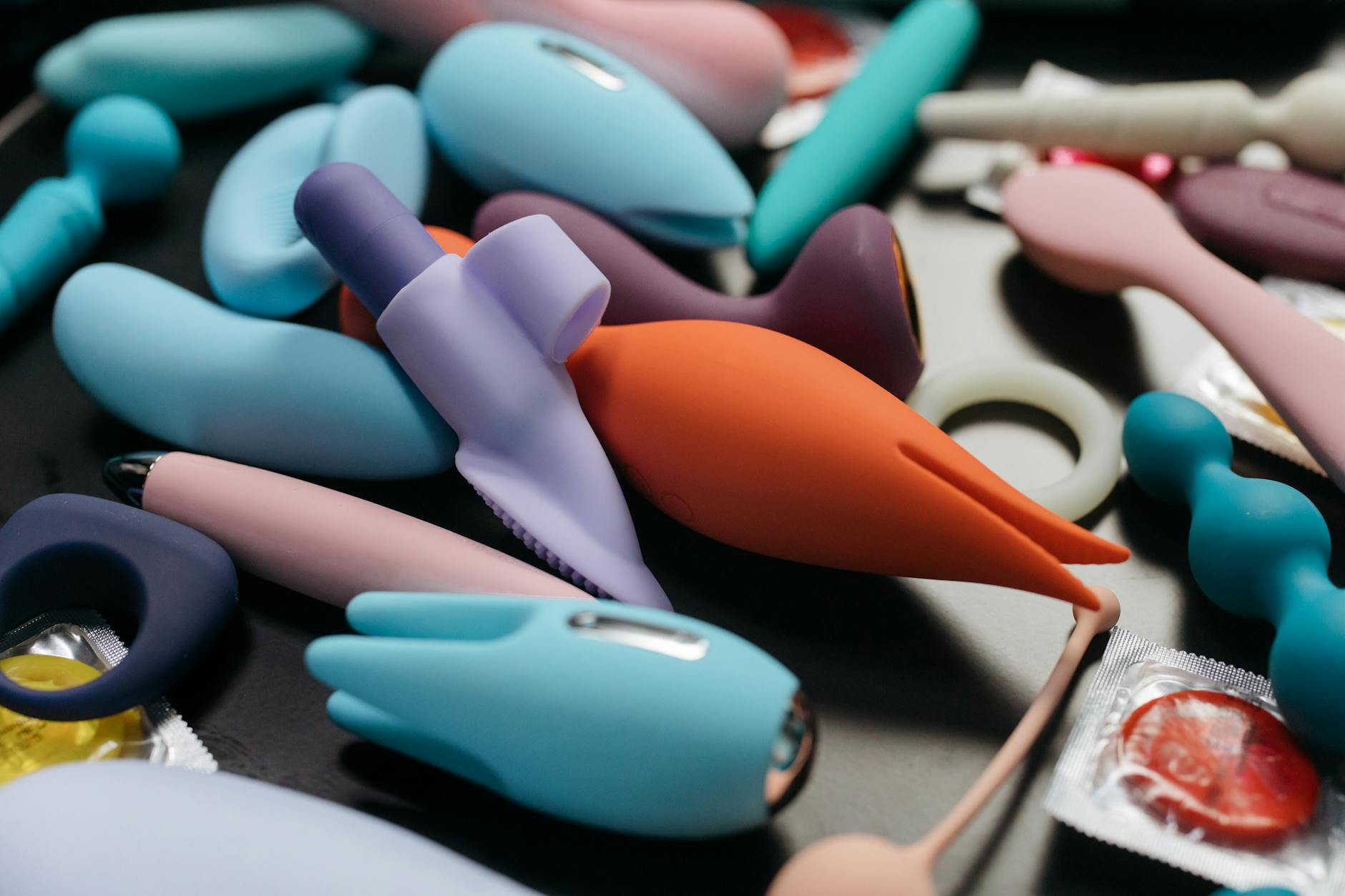
A lemon clitoral vibrator (also called a lem vibrator or lemon sucker by some) gives the slower partner a way to continue building toward orgasm while the faster partner stays present without waiting.
Here's the critical part: it's not one of you using it while the other watches. Both of you are using it, or both of you are engaged with it. The faster person can stimulate themselves while staying connected to you, or you can use it on your partner while you continue what you're doing. You're not abandoning the slower person to catch up. You're both moving forward.
The suction-based design of lemon vibrators (also marketed as lemon sexual toys or lemon adult toys by brands like Hallo Nancy Lems) works differently than traditional vibration. Suction stimulates in a way that's often more efficient for people who need consistent, building sensation. It's not a gimmick. It's a different signal to the nervous system.
The lem vibrator's compact design means it fits into almost any position. You're not reconfiguring your entire bodies. You're just adding a tool that lets the slower person keep going while the faster person stays in contact.
The exact setup that works
Three things need to happen first.
One: you actually talk about it. Not during sex. Not when you're trying to solve something. Just say it. "Our bodies have different timelines. I want us to come together or at least both feel like we're coming together. Here's an idea." That's it. The conversation isn't about blame. It's about logistics.
Two: you both know how the lemon clitoral vibrator works beforehand. Test it solo. Know the patterns. Know how you like the intensity. A lot of couples bring a toy into bed without either person knowing what it actually does, which creates this weird fumbling moment that kills the mood. Spend ten minutes with it alone. Then you both know.
Three: you agree on what success looks like. Is the goal that you come at exactly the same time? That's rare and shouldn't be the standard. Is the goal that both of you feel like you're in the experience together? That's usually it. Write that down if you need to. Make it concrete.
Now the setup.
If you're the faster partner, start as normal. Let your arousal build at its pace. When you're getting close, that's when the lemon vibrator comes in. You can hand it to your partner, or they can grab it. They continue what they're doing with you (penetration, whatever position you're in) while starting with the vibrator. You stay present. You're not checking out. You're watching them, touching them, staying in eye contact if you can.
If you're the slower partner, there's no rush to use it immediately. Use it when you need it. Some people like it from the start. Others like to warm up first, then introduce it when sensation alone isn't quite enough. The lem vibrator's patterns let you escalate. Start at pattern one. Build to three. You control the speed.
The thing nobody mentions: the slower person almost always gets there faster with this setup because they're not anxious about keeping up. The faster person stays aroused because they're still engaged instead of lying still and watching the clock.
Managing the mental part (which is half the battle)
Let's be honest. Using a vibrator together as a couple sometimes comes with weird feelings. The faster person might worry they're "not enough." The slower person might feel inadequate. Both are incorrect and both are completely normal to feel.
Here's what actually happens: you're using a tool to sync your bodies, not replacing something that was working. You're expanding what's possible, not admitting defeat. If one of you is still carrying shame about taking longer or coming faster, that needs addressing before the vibrator even touches anyone.
That's where you might benefit from talking with a therapist or coach about the relational piece. A lemon vibrator solves the logistics. It doesn't solve the story you're both telling yourselves about what different timing means about your desirability or your relationship.
But here's what it does do: it removes the pressure. Once pressure is gone, a lot of other anxieties settle. You stop performing. You start feeling. And that's when orgasms—both of them—actually get easier.
The positioning that actually works
Unlike a wand vibrator, which requires a specific angle, lemon clitoral vibrators are compact enough to fit into most positions without changing anything. If you're lying on top of them, they can reach. If you're side by side, they work. If you're in a position where direct access to the clitoris isn't easy, the person using the vibrator can angle it slightly, and most modern lemon suckers are designed to be flexible enough to adapt.
The most natural setup for couples is missionary or a position where the slower partner is facing their faster partner. That way you can see each other, maintain eye contact, stay connected. The vibrator does its job, but the emotional connection stays the center.
If you prefer a different position, test it first. Don't figure out the logistics for the first time when you're both aroused. That moment should feel easy, not like you're assembling furniture.
What to do if the vibrator feels too intense
Some people find that lemon clitoral vibrators feel immediately overwhelming. If that's you, you're not broken. The clitoris has 8,000 nerve endings in a small space. Intensive stimulation isn't for everyone.
Start with the lowest pattern. Seriously. Stay there for a minute. Let your nervous system adjust. Then move to pattern two if you want to. A lot of people find that suction-based stimulation (what lem vibrators and lemon adult toys deliver) actually feels less jarring than traditional vibration because it's not a harsh buzzing sensation. It's more of a gentle pull.
But if it's still too much, backup is to use the vibrator with your partner's hand between your body and the toy. The skin-to-skin contact softens the sensation. You're not getting direct stimulation. You're getting the signal through a buffer.
If stimulation still feels too intense no matter what, read more about this in our guide on how to use lemon vibrators when stimulation feels too intense. That covers other tools and approaches specifically for sensitive bodies.
When one person wants it and the other doesn't
Sometimes the slower partner is skeptical. "I don't need a vibrator. I just need more time." That's fair. A vibrator isn't necessary. But it's also not indulgent. It's a tool that lets both of you feel like you're in the same experience.
The conversation isn't "you have to use this." It's "I want us to come together. What would make that feel good for you?" If the answer is no vibrator, what is it? More foreplay? A different position? A specific kind of touch before you start?
If the faster partner wants the vibrator and the slower partner isn't sure, it's worth trying it once with zero expectation. The slower person might feel immediate relief at the permission to take their time. The faster person might feel relief at staying engaged instead of waiting.
If the slower partner wants it and the faster partner feels threatened, that's a bigger conversation about what arousal means to both of you. And that's actually the relationship work that matters. A lemon clitoral vibrator can help, but it won't fix a deeper issue with intimacy.
FAQ: Timing, toys, and real couples
Q: Is it weird to need a vibrator if my partner is already inside me?
No. Your body is yours. If clitoral stimulation helps you orgasm, that's information about your nervous system, not evidence that your partner is failing you. Most people with vulvas need clitoral stimulation to come. A lemon vibrator during partnered sex isn't a workaround. It's just finally including the part of your body that makes orgasm actually possible for you.
Q: If I use a vibrator, will I become dependent on it?
Not in the way you're probably imagining. Your body won't "forget" how to respond to your partner's touch. But you might find that once you experience what reliable orgasm feels like, you don't want to go back to inconsistent sensation. That's not dependence. That's knowing what works and choosing it. And that's completely fine.
Q: Can we use a lemon clitoral vibrator if we're doing penetrative sex?
Absolutely. That's actually one of the most common ways couples use them. The vibrator focuses on the clitoris while whatever else is happening continues. The lem vibrator's size makes this easy because it's not in the way.
Q: What if the vibrator feels less intimate than just touching each other?
If it does, you might not be using it in a way that actually works for you. This isn't about replacing your touch. It's about adding a dimension. You're still inside them. You're still kissing. You're still present. The vibrator is just doing one specific job so that both of you can finish at a pace that doesn't create tension.
Some couples find it becomes more intimate because there's less performance anxiety. You're both just feeling good instead of one person managing the other person's timeline.
Q: How do we even bring this up without it being awkward?
Start outside the bedroom. "I've been thinking about our timing thing. I don't want either of us to feel rushed anymore. I found this vibrator that might help us both feel more connected. What do you think?" Then show them. Let them hold it. Ask questions. Make it practical, not mysterious.
Most awkwardness comes from treating it like a secret. When you talk about it plainly, it becomes just another tool. Like lube. Nobody gets weird about lube anymore.
The thing that actually matters
Different orgasm timings aren't a problem to solve. They're a reality to work with. A lemon vibrator (lemon sexual toy, lem vibrator—whatever you want to call it) just means you stop choosing between rushing, waiting, or disconnecting. You get to come together, on your own terms, without someone sacrificing their pace.
That's not just about orgasm. That's about feeling like you're in the same experience, moving at the same speed, both mattering equally. And that actually does change everything.
If you're ready to try, start with solo exploration first. Know what the vibrator does. Then bring it into the space with your partner. And then just practice. The first time might feel awkward. The second time less so. By the fifth time, it's just part of how you two work together.
Your pleasure deserves that. Both of you do. If you have questions about how to make this work for your specific situation, reach out to our team. We're here to help couples figure this out.