
The timing trap nobody talks about
Here's the thing: most couples assume desire is something you either have together or you don't. One person wants sex. The other doesn't. End of story. But that's not how it actually works, and the gap between "I'm ready" and "You're ready" is where a lot of good relationships quietly break down.
I'm not talking about mismatched libido. I'm talking about the exact scenario you're living right now: both of you want sex. You both want pleasure. But it never happens at the same time. One of you is feeling it on Tuesday morning. The other person peaks on Friday night. By the time you sync up, one person has already moved on emotionally. The moment collapsed. Resentment starts building, and suddenly sex becomes another thing you're failing at together.
Why timing mismatch feels different than low desire
When one partner's libido is generally low, that's a stable problem. You can plan around it, adjust expectations, find workarounds. But timing mismatch is its own beast because it's not about quantity. It's about synchronization. Both partners have functional desire. Both could have great sex. But the logistics of hitting that window together feels impossible.
The reason lemon vibrators matter here isn't because they're magic. It's because they break the cycle of waiting for perfect alignment. They let pleasure exist on individual timelines without creating guilt or pressure.
The first conversation: naming what's actually happening
Before you introduce any tool, including a lemon clitoral vibrator or other adult toys from Hallo Nancy Lems, you need to get honest about the pattern. This conversation is easier if you're not in the bedroom.
Try this: "I've noticed we both want sex, but we're never ready at the same time. I don't think it's about how much we want each other. I think it's about scheduling our bodies. Can we talk about that?"
That framing does something important. It removes blame. You're not saying "You never want me." You're naming a logistical problem that affects both of you. Most couples feel relieved to finally name it.
Then listen. Ask what happens on their end. Do they need more wind-up time? Are they waiting for a specific moment alone? Is their arousal more responsive (needs external stimulation) versus spontaneous (builds on its own)? These distinctions matter for the strategy that follows.
How lemon vibrators fit into asynchronous pleasure
Lemon sucker technology like the Lem vibrator works here because it's genuinely fast and satisfying for solo use. If you're the partner who typically needs longer to warm up, you can self-stimulate with a lemon vibrator while your partner does the same. You're together but independent. You're not waiting. You're not pressuring. You're both building arousal on your own timeline.
This sounds simple, but it changes everything psychologically. Instead of "I need you to get ready faster," it becomes "Let's both get ready together." You can be in the same room, touching, talking, building intimacy while each of you accesses the stimulation you actually need. One person might be using a lemon clitoral vibrator while the other uses a different type of stimulation entirely. The key is that you're not waiting for synchronization to happen by accident.
The practical setup that actually works
Talk about what this looks like logistically. Does one person initiate with "I'm feeling something. Are you?" and if the answer is no, you agree to 20 minutes of solo pleasure with vibrators while in the same bed? Do you text during the day if you're feeling aroused, so the other person can start warming up before they come home? Do you set a weekly window, like Sunday afternoon, where you both know it's a possibility and you can mentally prepare?
The specifics vary by couple. What matters is that you're not relying on spontaneous alignment anymore. You're creating conditions where timing becomes manageable.
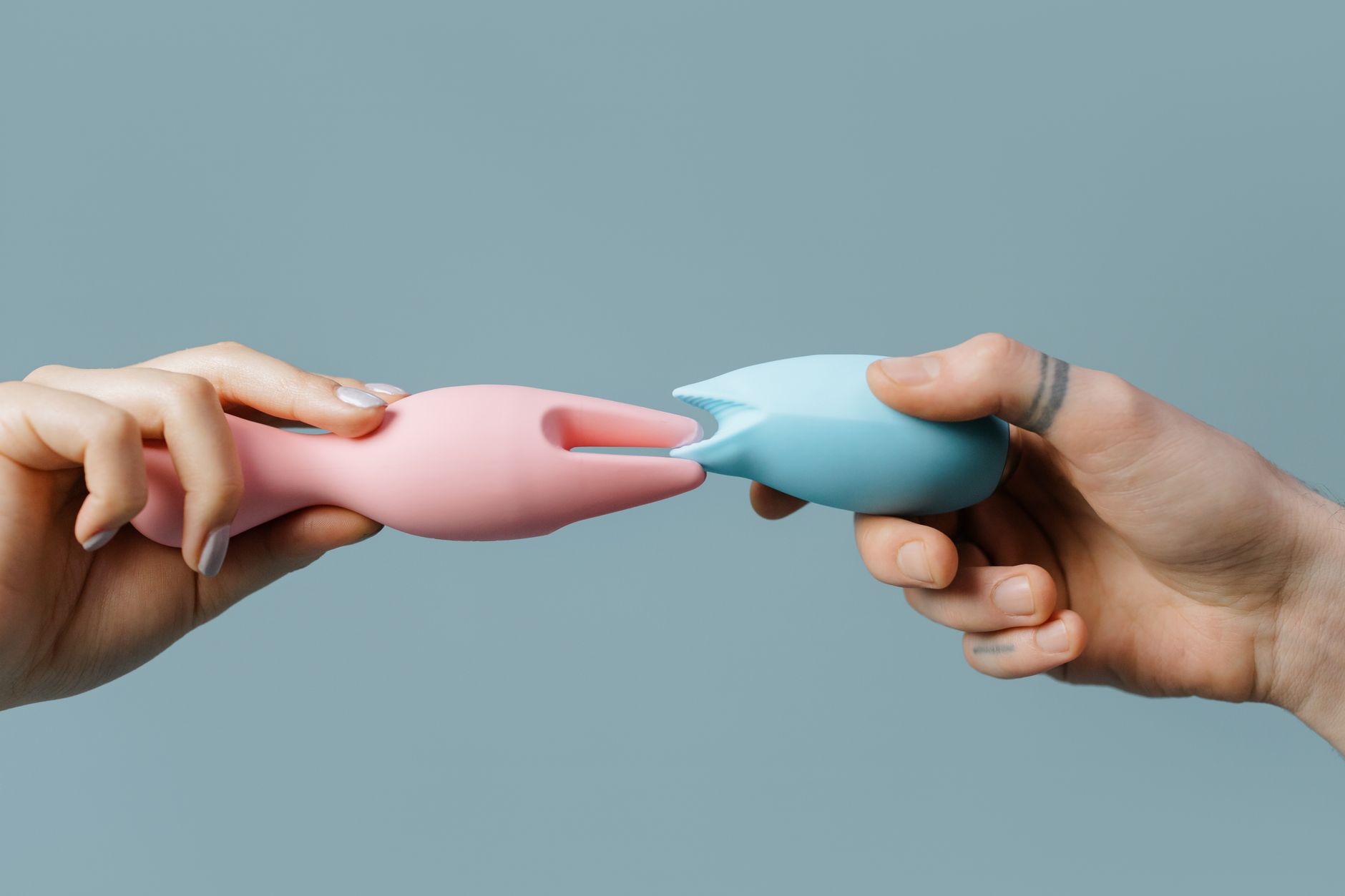
Photo by cottonbro studio on Pexels
What changes once you add a lemon vibrator to the mix
When couples start using lemon sexual toys or other vibrators together in this framework, several things happen. First, arousal accelerates. You're not waiting for natural wetness or for your nervous system to gradually shift into sex mode. The stimulation does that work faster. Second, there's less performance pressure. You're focused on sensation, not on "Are they ready yet?" Third, and this matters more than people admit, you both get to experience pleasure as something you create together rather than something that happens to you in tandem.
Many couples tell me that once they started using lemon vibrators this way, sex actually became less frequent but infinitely higher quality. They were having sex at the intersection of desire rather than forcing it to happen on somebody's timeline.
When one partner likes vibrators and the other doesn't
Timing mismatches often come with a secondary problem: one person is into toys and the other isn't. If you're the person who wants to use a lemon vibrator and your partner feels threatened or left out, that's a different conversation.
Here's the framing that works: "This isn't about replacing you. It's about me getting access to stimulation that helps me show up for us. It's actually so I can be more present with you." If your partner is resistant, ask what specifically bothers them. Is it feeling inadequate? Is it a learned discomfort with sex toys? Is it something else? Address the actual fear, not the vibrator.
For partners who are hesitant about trying anything new, curiosity often trumps resistance. Instead of "Try this vibrator," try "Want to watch me use this and tell me what you notice?" Observation is less intimidating than participation.
Building the bridge from solo to partnered pleasure
Once timing mismatch is handled through independent or semi-independent vibrator use, you can start experimenting with how vibrators fit into actual partnered sex. Some couples find that using a lemon clitoral vibrator during penetration completely changes the experience because orgasm becomes more accessible. Others discover that one partner using a vibrator while the other uses their hands creates a rhythm that feels more connected than trying to sync without tools.
The point isn't to add complexity. It's to add options. You're expanding the menu of what sex can look like when you're ready at different times.
Addressing the resentment that's already there
If timing mismatch has been a problem for a while, there's probably some anger or disappointment already living in the relationship. A vibrator won't fix that. You need to name it first.
Sometimes that means acknowledging: "I know I've made you feel unwanted when I wasn't ready. And I know you've felt rejected when you were ready and I wasn't. We've both been hurt by this." Then: "I don't want to keep doing that. I want to figure out a way that works for both of us." That's the real work. The vibrator is just the tool that makes the new pattern possible.
Why this matters beyond the bedroom
Couples who solve timing mismatch with honesty and tools like lemon vibrators often report that the benefits spread to other parts of the relationship. They feel less resentful generally. They stop keeping score on whose needs matter more. They realize they can be in sync about something important without being identical.
That's the thing about desire timing. It's not actually about sex. It's about whether you're willing to solve problems together, even awkward ones. It's about whether you believe your partner's pleasure matters as much as your own. Introducing a lemon sucker or other clitoral vibrator from Hallo Nancy Lems into the conversation is just the vehicle for that discussion.
FAQ: Timing, tools, and what to try next
How long does it usually take to sync pleasure timing with vibrators?
There's no standard timeline, but most couples see a shift within 2-4 weeks once they've had the conversation and agreed on a framework. What changes first is usually the emotional pressure. You stop waiting for perfect alignment and just start playing. Physiologically, using lemon vibrators or other stimulation tools often speeds up arousal, so actual sync becomes easier naturally.
What if one partner wants to use a vibrator and the other feels insecure?
Insecurity here usually comes from one of three places: fear of inadequacy, learned discomfort with sex toys, or a past experience where a vibrator felt like rejection. Start by naming which one it is. Then listen without defending. "I hear that this feels like I'm choosing the toy over you" is different from "I'm worried you don't like me anymore." Address the actual fear. In most cases, watching your partner experience pleasure with a tool leads to curiosity, not competition.
Can lemon vibrators actually speed up arousal enough to matter?
Yes. Lemon clitoral vibrators use air-suction technology that stimulates a much larger surface area than fingers alone. For many people, especially those who need consistent, targeted stimulation, arousal builds in 5-10 minutes instead of 20-30. That changes the timing mismatch equation significantly. You go from "Will we ever sync?" to "Can we both be ready in 15 minutes?" That's a solvable problem.
What if we try this and I still don't feel connected?
Connection isn't automatic with any tool or framework. If using lemon sexual toys together doesn't create the feeling you want, you might need a conversation with a couples therapist. Sometimes timing mismatch is a symptom of something deeper: resentment, disconnection, or mismatched relationship needs. A vibrator can't fix those. But once you've ruled out the mechanics, you know the real work is relational, not logistical.
Is it normal to feel awkward using a vibrator with a partner the first time?
Completely normal. You're introducing something new into an intimate space. There's vulnerability in that. Give yourself permission to feel weird. Most couples tell me the awkwardness passes after the second or third time. What helps is not making a big deal out of it. Just bring it into the bedroom matter-of-factly, like you would bring lubricant or condoms.
How do we transition from using vibrators solo to using them together?
Slowly. Start by using your lemon vibrator alone while your partner is in the room but not directly involved. Maybe they're reading or on their phone. Then graduate to mutual solo use in the same bed. Then to one partner using a vibrator while the other uses hands or other stimulation. Each step normalizes the tool. By the time you're integrating it into partnered sex, it just feels like another part of the experience.
The real work starts with honest conversation
Timing mismatch feels like a sexual problem, but it's actually a communication problem wearing a sexual disguise. Once you name it, tools like lemon vibrators become genuinely useful. They're not a substitute for addressing the real issue. They're the framework that makes it possible to stop waiting and start building pleasure together on a realistic timeline.
If you want to dig deeper into how couples navigate these conversations, our guide on arousal timing walks through the specifics. And if you're feeling stuck on the relational side of this, exploring pleasure after emotional distance might offer a helpful perspective.
The couples who win at this aren't the ones with magically aligned desire. They're the ones who stopped waiting for that miracle and started solving the problem instead.