
The real reason solo play feels rushed
Here's what I hear from most people: they use their lemon vibrator, it feels good, and ten minutes later it's done. No buildup, no afterglow, just efficiency. And then they wonder why the experience feels hollow.
The problem isn't the toy. A quality lemon vibrator like the Lem delivers intense clitoral stimulation that's genuinely effective. The problem is that most of us have been trained to treat self-pleasure like a task to check off, not an experience to actually inhabit.
When you shift your mindset around solo play, everything changes. Not because the toy gets better, but because you do.
Reframe what solo play actually is
Let me be direct: self-pleasure is not a consolation prize for when you don't have a partner. It's not a lesser version of anything. It's its own complete experience with its own potential for depth, intensity, and genuine satisfaction.
This matters because your lemon vibrator will perform at the level of intention you bring to it. If you're rushing, it'll help you rush to an orgasm. If you're present and curious, it'll help you explore sensations you've probably never noticed before.
Solo play is also the best place to learn your own pleasure architecture. What patterns work for you. What intensity you actually prefer, not what you think you should prefer. How your body responds to different speeds, angles, and rhythms. Once you know this, everything else gets easier.
The setup that matters
You need three things: privacy, comfort, and no clock.
Privacy is straightforward. Comfort means a space where your body can relax completely. That's a bedroom, a bath, a couch with a blanket. Temperature matters more than people admit. Your body tenses if it's cold. Set the room temperature, grab a robe nearby, turn off the overhead light in favor of something dimmer.
No clock is harder. Put your phone in the other room. Plan for at least 30 minutes, ideally 45. The first 15 are usually warm-up and exploration. The intensity happens after that. If you're always stopping yourself because you're "running behind," you're training your nervous system to stay in activation rather than sinking into sensation.
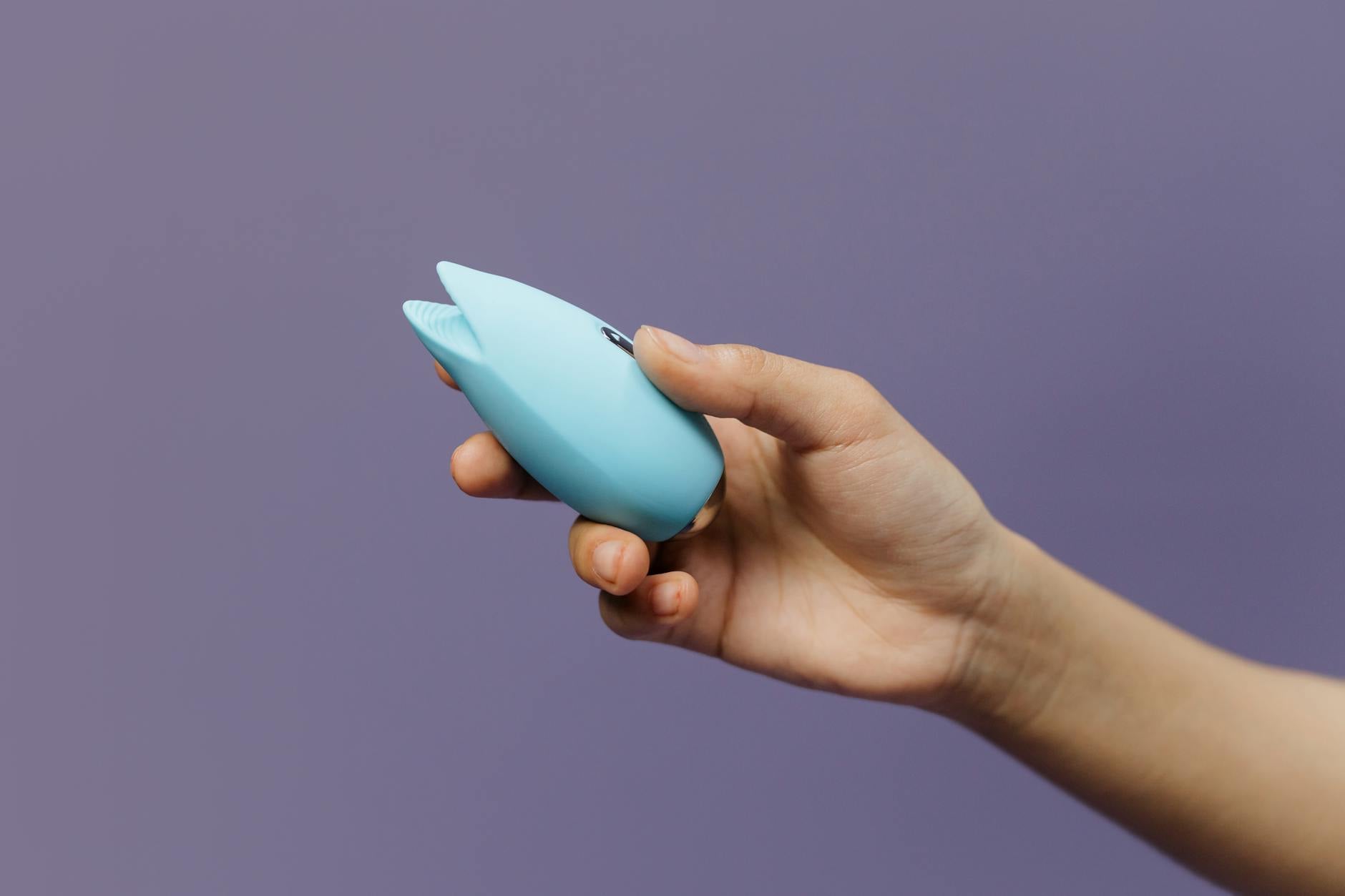
Photo by cottonbro studio on Pexels
The warm-up is where the real work happens
Don't start with your lemon clitoral vibrator. I know that sounds counterintuitive, but stay with me.
Begin with your hands. Touch your thighs, your stomach, your inner arms. Notice where you have sensation and where you feel numb. Most people discover they've been dissociated from large parts of their body. Bringing that back online matters. This is not frivolous. This is the foundation that lets your vibrator actually land.
After five to eight minutes of hand exploration, add lubrication. Water-based is ideal because it stays wet longer and mimics what your body naturally produces. This isn't about need. It's about glide and sensation. A vibrator moving smoothly against your clitoris feels completely different from one moving against dry tissue.
Now slow your hands down. This is where people usually rush. They want to get to the vibrator. But your nervous system needs gradual arousal. Touch your clitoris gently. Circle it. Vary the pressure. See what feels good rather than just what feels stimulating. There's a difference.
After about ten minutes of this (yes, ten), your body will signal it's ready. You'll notice increased wetness, a shift in your breathing, a subtle sense that your clitoris is engorged and responsive.
Entering with your lemon vibrator
Start on the lowest setting. I know the Lem and other quality clitoral vibrators have multiple intensity levels, and your instinct might be to jump to level three or four. Don't. Level one is your research phase.
Place the vibrator directly over your clitoris or just to one side. Some people prefer slightly off-center because the direct pressure can be too much. You're learning your own map right now. Move it slowly across the area. Notice where sensation concentrates. Notice what makes you want to move toward it versus away from it.
Keep your breathing steady. Most people unconsciously hold their breath during pleasure. This keeps you in your head and out of your body. Make a deliberate choice to breathe, especially on exhales. You can even moan if that's your style. Sound is a nervous system reset that actually deepens arousal.
Stay at level one for longer than feels natural. Maybe five minutes. Let your body acclimate and deepen its response. Then move to level two.
Building intensity without rushing
Here's where lemon vibrators shine. The progression from low to high intensity is smooth and buildable in a way that's different from other toys. You can actually layer sensation rather than jump between states.
As you move up intensity levels, notice whether you want to stay in one spot or move the vibrator around. Both are valid. Some people like steady pressure. Others like patterns. Some people discover they like a combination. Your body will tell you if you're paying attention.
The plateau you hit right before orgasm is worth exploring. Most people push through it toward the finish line. But if you stay in the plateau for a minute or two, varying the angle or intensity slightly, you often find that the eventual orgasm is deeper and longer. This is your nervous system completing a full arc rather than rushing to release.
What an intense orgasm actually requires
It's not the most powerful vibration. It's relaxation plus engagement. This sounds contradictory, but it's not.
Relaxation means your pelvic floor is actually relaxed, not gripped. Many people tense their pelvic floor during arousal because they've been taught that tension leads to pleasure. Sometimes. But full-body sensation requires releasing that tension. You can do this by consciously unclenching right before you expect orgasm. Breathe into your pelvic floor like you're inviting it to let go.
Engagement means your attention is completely in your body, not in your head judging the experience or wondering if you're doing it right. This is why the setup matters. A ringing phone, a thought about your to-do list, or discomfort about what you're doing derails everything.
When you hit the right balance, your orgasm isn't just clitoral. It radiates up through your pelvis, your abdomen, sometimes your entire body. People often describe this as full-body pleasure rather than localized sensation. This is available to you, regularly, without a partner or any equipment other than what you already have.
After the orgasm is part of the experience
Don't stop your practice the moment you orgasm. That's like leaving a concert before the final movement.
After climax, your nervous system goes into a gentle recovery phase. Turn off the vibrator but keep it nearby. Rest your hands on your body. Notice the sensations fading. Notice your breathing slowing. Notice how you feel differently in your body. This is integration. This is where pleasure becomes memory and confidence rather than just a physical event.
If you're someone with a body that can have multiple orgasms, you might find that staying present in the afterglow actually opens the door for another one, rather than the desperate pushing that usually fails. But even if you're one-and-done, this integration time transforms the experience from transactional to holistic.
The tool quality actually matters
I mention this not as a brand pitch but as a clinician. A quality lemon vibrator with stable patterns, good materials, and reliable intensity levels gives you a consistent tool for learning your pleasure. Cheap vibrators with unpredictable pulsing or materials that irritate your skin add friction (metaphorically and literally) to your exploration.
The Lem and similar lemon clitoral vibrators are designed specifically for the intense stimulation that most people with clitorises actually prefer. You're not paying for marketing. You're paying for functionality that supports your actual learning.
People also ask
How often should I use a lemon vibrator for solo play?
As often as you want. There's no upper limit to healthy self-pleasure. Some people find that regular solo play (a few times a week) significantly improves their overall sexual response and confidence. Others prefer monthly or occasional use. What matters is that it's chosen freely, not compulsive, and that it feels nourishing rather than frantic. Your body will tell you if the frequency is right.
Can I use a lemon vibrator if I have vulvovaginal sensitivity?
Absolutely. Start with lower intensity levels and water-based lubrication. The suction-style design of many clitoral vibrators like the Lem is actually gentler than traditional vibration for people with sensitivity because it doesn't rely on high-speed friction. If you're experiencing pain during use, that's worth discussing with a clinician. Many sensitivity issues are treatable, and a vibrator can actually be part of the solution once you've got the right support.
Is it normal to feel disconnected during solo play even with a good vibrator?
Yes, and it's usually about your nervous system being stuck in performance mode. Our culture trains us to experience pleasure as something that should happen to us, not something we create. Solo play is where you learn to flip that. Try focusing on sensation rather than orgasm for a few sessions. Notice what feels good rather than reaching for what should feel good. The disconnection often resolves when you shift from destination-focused to experience-focused.
Why does my lemon vibrator feel less intense than it did the first time I used it?
Your body adapts to consistent stimulation. This is normal and not a sign the toy is broken. It usually means you're ready to explore different patterns, angles, or intensities. It can also mean your nervous system needs a break. Try taking a week or two off, then returning. Many people find their sensitivity resets. You might also explore combining your lemon vibrator with different types of stimulation like hand play or fantasy, which can restore novelty.
Can solo play with a vibrator actually improve partnered sex?
Completely. When you understand your own arousal patterns and what your body actually needs, you can communicate that to a partner. You also arrive in partnered situations more relaxed and confident in your own pleasure, which changes the entire dynamic. Plus, knowing you can please yourself removes desperation from partnered sex and makes it genuinely collaborative. Many couples find that solo exploration actually strengthens their sexual connection.
What if I can't orgasm with a vibrator during solo play?
First, check whether you're being kind to yourself. No clock, no judgment, no agenda. Sometimes the absence of pressure is enough. Second, explore whether a different angle, intensity level, or pattern works better. Not everyone responds to the same type of stimulation. Third, consider whether there's any underlying stress, medication, or health factor that's affecting arousal. A clinician or sex therapist can help diagnose. Lots of people don't orgasm from vibrators alone and find other routes work better. That's fine. The goal is learning your body, not hitting a checkpoint.
The bigger picture
Solo play with a lemon vibrator is not about proving something to yourself or optimizing your sexual response for someone else's benefit. It's about claiming your own pleasure as a legitimate part of your life and getting to know your body as the complex, responsive system it actually is.
When you approach self-pleasure with curiosity and patience instead of urgency, everything shifts. Your orgasms become more intense. Your confidence increases. Your partnered experiences improve. Your relationship with your own body deepens.
You don't need permission to prioritize this. You deserve the time, the privacy, and the full experience. Start with your mindset. Everything else follows.
Have questions about technique, safety, or what works best for your body? Reach out to Hello Nancy. We're here to help you figure out what actually works for you.