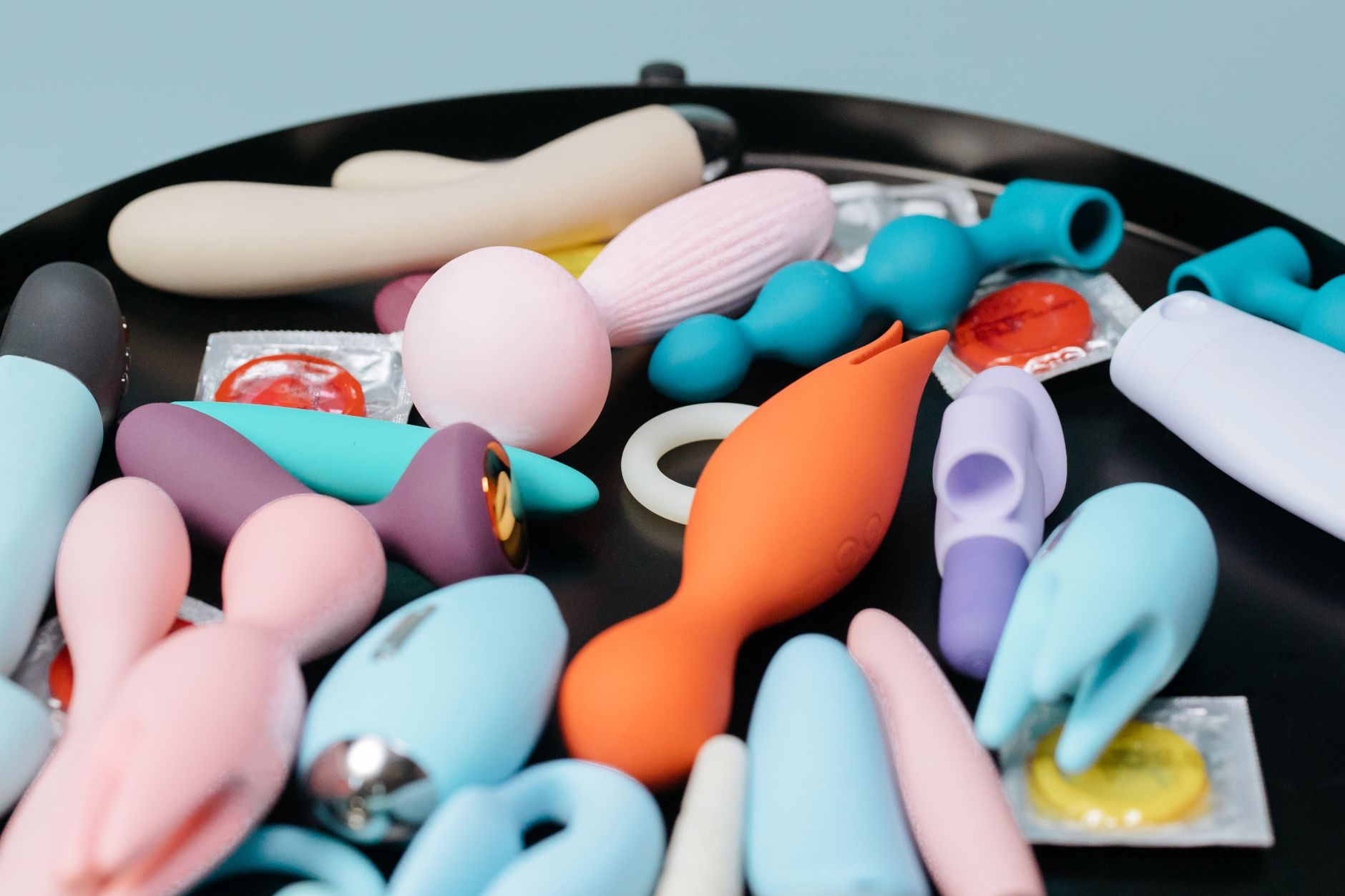
Let's talk about postpartum pleasure without the awkwardness
Your body just did something your body has never done before. It grew another human. It labored. It healed. And now people expect you to just... move on. But your nervous system didn't move on. Your pelvic floor didn't move on. Your hormones definitely didn't move on.
Pleasure after childbirth isn't just about getting back to normal. It's about rediscovering your body when it's fundamentally changed. And lemon vibrators, with their gentle suction-based stimulation, can actually be a smarter entry point than traditional vibrators as you rebuild that connection.
When the postpartum window actually opens
Here's what doctors tell you: wait six weeks, or twelve weeks if you tore badly or had a cesarean. That's medically sound for penetrative sex. But pleasure? The timeline is messier and more personal.
Your pelvic floor is swollen for weeks. Hormones are in free fall. If you're breastfeeding, estrogen is still suppressed. And your brain is running on 40% capacity because you're sleeping four hours a night. This is not a timeline problem. This is a readiness problem.
I tell clients: forget the calendar. Pay attention to your body. Can you walk without pain? Can you laugh without leaking? Can you sit comfortably for more than an hour? Those are better markers than arbitrary week numbers.
That said, at least eight weeks before exploring any kind of clitoral stimulation, even external and gentle. Your tissues need time. Your nervous system needs time. Your sense of ownership over your own body needs time.
Why lemon vibrators feel different in recovery
Traditional vibrators rely on direct vibration, which requires friction, which requires pressure. After childbirth, pressure is the last thing your healing tissues want. Lemon clitoral vibrators work differently. They use gentle air suction that stimulates the clitoris without mechanical force.
That distinction matters. With a lemon vibrator, you're not grinding back into sensation. You're letting the toy do the work while your body stays passive. That passive quality is weirdly crucial when you're rebuilding trust in your own body.
The suction also feels less intense in the early stages of recovery. You can start at the lowest setting and let your body determine what feels okay. With traditional vibrators, there's less nuance. Vibration is vibration, and even the lowest setting can feel like too much on tissues that are still tender.
Starting: the four-week sensibility check
Before you touch anything, ask yourself these questions honestly.
Am I doing this for me, or because I feel like I should? Postpartum pressure is real. Partners want things to "get back to normal." You feel guilty. Don't touch a lemon vibrator until you actually want to. There's no timeline that matters more than yours.
Can I be alone for 20 minutes without interruption? This is harder than it sounds when you're parenting. But if you can't find space for yourself, you're not ready yet. Sneaking five minutes between diaper changes will only frustrate you.
Does my pelvic floor feel like mine? You'll know this. You'll be able to control it, relax it, feel where it is in your body. If you're still numb or in pain, wait longer.
Do I feel even a flicker of desire? Not orgasm. Not excitement. Just the faint ghost of wanting pleasure. That's your signal.
How to introduce a lemon vibrator safely
Start with the external clitoris only. No penetration, no internal play. Your pelvic floor is still adapting. Your tissues are still healing. Keep the focus narrow.
Warm yourself up first. And I mean actually warm. Five to ten minutes of touch that has nothing to do with your genitals. Neck, breasts, inner arms, thighs. Your arousal system needs runway. Postpartum arousal is slower to build anyway. Give it space.
When you're ready, use the lemon vibrator on the lowest setting. Start the pulse and hold it against the outer part of the clitoris. Don't move it. Don't search for the "perfect" spot. Just let it be there and notice what your body does.
Your first session should be about information, not sensation. What does the suction feel like? How does your pelvic floor respond? Does anything hurt? This is research, not performance.
The hormonal wrench: why things feel weird
If you're breastfeeding, your estrogen is suppressed. This is why your tissues feel drier, why sensation feels muted, why arousal feels like pushing a boulder uphill. It's not depression. It's not loss of desire. It's biochemistry.
The lemon vibrator helps because it doesn't demand moisture or sensitivity the way penetration does. But you still need to honor that your body is running on limited hormonal resources. Pleasure takes longer to build. Orgasm might not happen at all. Both are completely normal.
If you're not breastfeeding, estrogen is rebounding, but it's rebounding unevenly. Some days you'll feel more sensation. Other days, nothing. This variability can feel maddening. It's not. Your body is recalibrating.
The emotional layer that matters more than technique
Here's what I see in the therapy room: postpartum people often lose touch with their own pleasure because they've been touched by their baby, touched by their partner, touched by medical providers. Their body has become a resource for everyone else.
The lemon vibrator can be a way to reclaim your body as a place of pleasure for yourself. Not obligation. Not performance. Not anyone else's need. Just your own sensation and your own choice about what happens next.
This reclamation is harder than it sounds, especially in the first year postpartum. You might feel selfish. You might feel weird in your own skin. You might feel so touched out that the idea of any stimulation feels exhausting. All of that is normal and valid.
If you're partnered, here's the thing: your partner benefits from you feeling like yourself again. That's not selfish. That's foundational. A partner who wants you to feel pleasure again is a partner worth reconnecting with when you're ready.
Postpartum recovery isn't linear. Your pleasure recovery won't be either. That's not a failure. That's honestly how bodies work.
When to get professional help
If pain appears when you're using a lemon vibrator or during any kind of touch, stop and talk to your care provider. Persistent postpartum pain isn't something to tough through. It could be scar tissue, pelvic floor tension, or nerve involvement. All of it is treatable.
If you want to use a lemon clitoral vibrator but can't find desire weeks past your physical recovery, that's worth exploring with someone trained in postpartum mental health. Postpartum depression and anxiety can completely flatten pleasure. Addressing it isn't optional. It's how you get your life back.
If your partner isn't on board with your exploration, that's a separate conversation. You might want to talk to a couples counselor about that. Desire doesn't reappear on a partner's timeline. It reappears when you feel safe, supported, and autonomous in your own body.
The timeline is yours, not anyone else's
Some people feel ready to explore pleasure again at three months postpartum. Some take a year. Some take longer. The postpartum period is not a sprint back to baseline. It's a complete reorganization of your nervous system, your hormones, your priorities, and your body.
Lemon vibrators, with their gentle approach, can be a useful tool during that reorganization. But the tool isn't the point. Your pleasure is the point. Your sense of ownership over your own body is the point. Your timeline is the only one that matters.
Start when you're ready. Go slow. Pay attention to what feels okay. And remember: your body isn't broken. It's been through something enormous. That deserves care, patience, and gentleness.
Common questions about lemon vibrators postpartum
Can I use a lemon vibrator while breastfeeding?
Yes, absolutely. Lemon clitoral vibrators work entirely externally on the clitoris, so they don't interfere with breastfeeding. The suction-based stimulation is gentle enough for postpartum bodies, even when estrogen is suppressed from nursing. Just make sure your breasts aren't uncomfortably full before you start, and that you have time to relax without worrying about feeding schedules.
How long after a cesarean section can I use a lemon vibrator?
Wait at least eight to twelve weeks, the same timeline your doctor gives for any sexual activity. Your abdominal incision needs time to heal, and your pelvic floor needs time to adjust even though you didn't deliver vaginally. Once you're cleared by your provider and can laugh without pain, a lemon clitoral vibrator on the lowest setting is a gentle way to reconnect with pleasure externally.
Will using a lemon vibrator affect my milk supply?
No. There's no physiological connection between clitoral stimulation and milk supply. Your milk supply is driven by how often your baby feeds and how well they're emptying your breasts. Pleasure and arousal won't change that. If anything, taking time for your own pleasure reduces stress, which supports milk supply.
What if I feel guilty using a lemon vibrator while my partner is around?
That guilt is worth examining with someone. You deserve pleasure. You deserve autonomy over your own body. If your partner makes you feel guilty for that, that's a relationship issue worth exploring together. If you just feel weird about it, that's more normal postpartum anxiety. You might start by using your lemon vibrator when you're alone, on your own timeline, until you feel grounded in the pleasure itself.
Can I use a lemon vibrator if I'm still having postpartum bleeding?
Wait until your bleeding has stopped and you've been cleared by your provider. Once bleeding has stopped, external clitoral stimulation with a lemon vibrator is fine. Just make sure you're clean and comfortable before you start.
Is it normal that I don't want an orgasm yet, just sensation?
Completely normal. Orgasm after childbirth can feel intense, triggering, or just uninteresting depending on where you are in recovery. Some people want sensation without outcome. Some want to just remember what pleasure feels like without the goal of climax. A lemon vibrator is perfect for that exploratory phase. Let your body tell you what it needs.
Getting back to yourself
Postpartum recovery is long and nonlinear. Your pleasure recovery is part of that. It's not shallow or selfish to prioritize reconnecting with your own body. It's foundational to healing.
When you're ready, whether that's three months or three years after birth, a lemon vibrator can be a gentle companion in that rediscovery. No pressure. No timeline. Just your body, your pleasure, and your own choice about what comes next.
If you have questions about how to move forward with your partner during this phase, or if you're struggling with how your body feels after birth, consider reaching out to a relationship specialist. You deserve support in all of this.
References and further reading:
- American College of Obstetricians and Gynecologists (ACOG) guidelines on postpartum sexual health
- Pelvic Floor Physical Therapy Association: postpartum recovery research
- Gottman Institute resources on intimacy after parenthood
- International Association of Postpartum Relational Care (IAPRC) postpartum mental health guidelines