Here's what nobody tells you about menopause and sensation
Menopause doesn't erase pleasure. It reorganizes it. Estrogen and testosterone drop, tissue thins, lubrication changes, and the way your clitoris responds to touch becomes fundamentally different. That sounds like a loss until you actually experience it. Many of my clients report that their most satisfying orgasms came after menopause because they finally understood their own bodies well enough to ask for exactly what works.
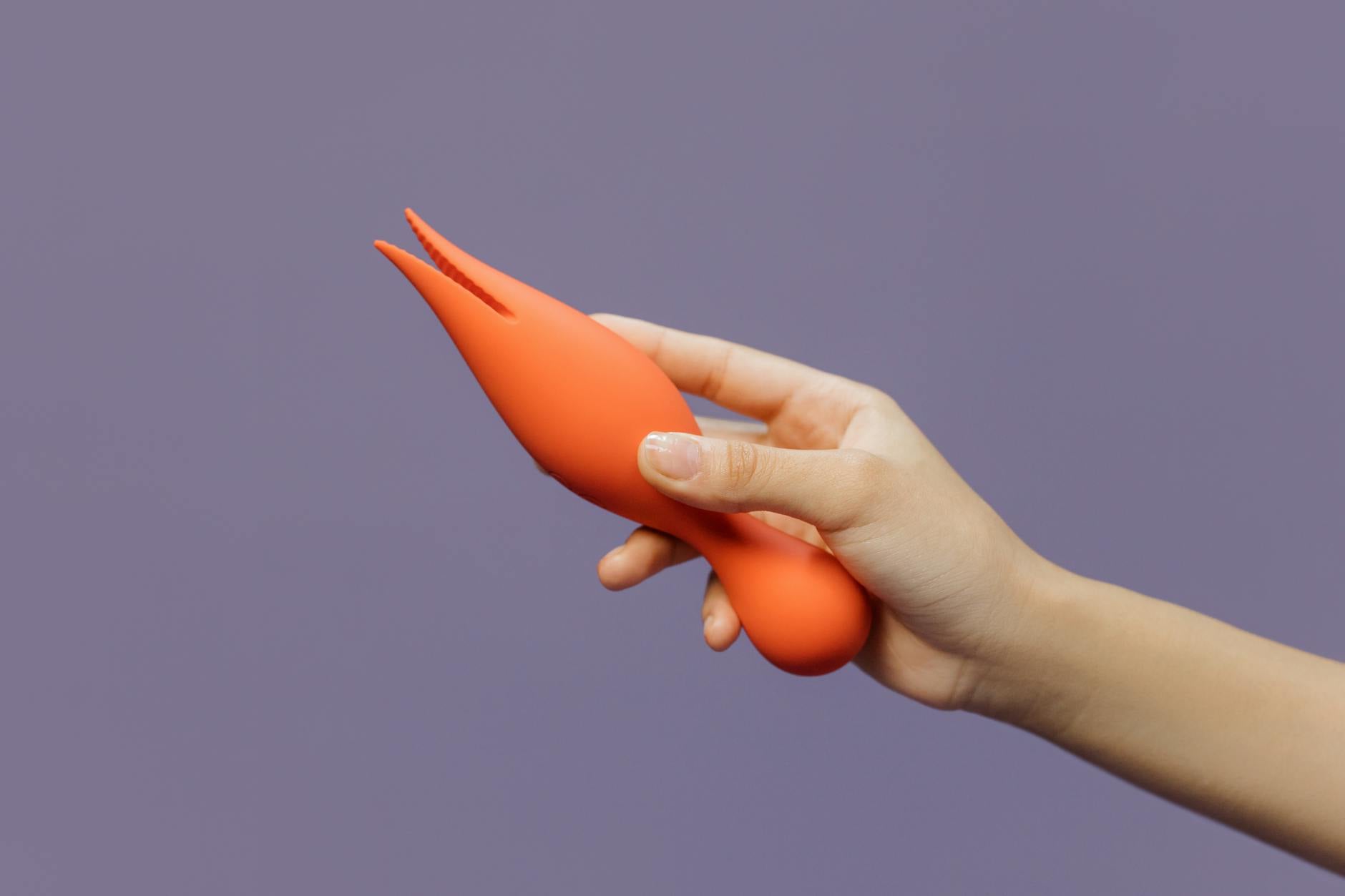
The catch? Traditional vibrators often stop working the same way. Higher intensity, direct friction, prolonged vibration. By 45 or 50, these can feel too harsh, too scattered, or just plain uncomfortable. Enter the lemon clitoral vibrator. The suction-based design of lemon vibrators works with how your tissue has changed, not against it.
I've worked with hundreds of people navigating this transition, and the pattern is consistent: switching to a lemon vibrator often feels like finally getting the right tool for the job.
What hormonal shifts actually change about sensation
Let's separate the real from the myth. When estrogen drops, a few specific things happen physiologically.
Your clitoral tissue becomes thinner and more sensitive to direct pressure. The glans (the visible tip) has the same nerve density as always, but less surrounding cushioning means a wand vibrator that felt amazing at 35 can feel sharp or even painful at 50. The clitoral hood (the tissue covering the clitoris) also loses elasticity, which changes how the clitoris is naturally protected during touch.
Your skin barrier loses moisture. This affects lubrication, yes, but also how stimulation feels overall. Friction becomes harsher without adequate slip. This is why water-based lube becomes non-negotiable, not optional.
Blood flow to the clitoris takes longer to increase. Arousal isn't slower because you want it less. It's slower because the vascular response has shifted. Your brain is just as capable of pleasure. Your nervous system just needs more time to prepare the tissue.
But here's what doesn't change: the nerve density in your clitoris, the brain's capacity for orgasm, or your ability to feel intensely. That last part matters because it means every sensation you're capable of is still there. The access route just shifted.
Why lemon suction vibrators fit menopause better than you'd expect
A lemon vibrator uses gentle suction combined with pulsing patterns instead of pure vibration. This matters enormously when your tissue has become sensitive.
Suction stimulates nerves without the shearing force of direct friction. It creates a seal around the clitoris, gently drawing the tissue into the cup, which engages thousands of nerve endings without the intensity of a vibrating wand making direct contact. For tissue that's now more delicate, this is often more comfortable and more effective.
The pulsing action is also slower and more rhythmic than many traditional vibrators. Instead of a constant buzz that can feel scattered, you get distinct waves of sensation that your nervous system can track and build on. This maps better onto how arousal actually works when you have more time to warm up.
Most importantly, lemon suction vibrators let you control intensity without abandoning the device entirely. You can use a lower suction pattern at the start, build over 15 to 20 minutes, and shift patterns as sensation deepens. With a wand, you're often choosing between "too much" and "not at all." A lem vibrator gives you a middle path.
The setup that actually works during hormonal transitions
Using a lemon clitoral vibrator during menopause isn't just about owning the right tool. It's about knowing how to use it.
Start with lubrication. Water-based lube isn't a sign of dysfunction. It's a normal and necessary adjustment. Apply it generously to the vulva before you even pick up the vibrator. Many people wait to add lube until they feel sensation dropping. That's backwards. Lube first, always. Silicone-based lubes feel richer but can degrade silicone toys, so stick with water-based for a lemon vibrator.
Begin at the lowest suction setting. Even if you used a high-intensity vibrator comfortably before, start low. Your tissue is more responsive now, and you're learning a new sensation. Spend 5 to 10 minutes at pattern 1 or 2. This isn't about rushing to orgasm. It's about letting arousal build without overwhelming sensitive tissue.
Position the lem vibrator cup over the clitoris, ensuring a light seal. You don't need to press hard. The suction does the work. Many people press as though the vibrator needs force to work, which creates unnecessary pressure. Let the cup sit gently. Your body will draw inward slightly as arousal increases.
Gradually shift patterns upward after 10 to 15 minutes. If you started at pattern 1, move to 2 around minute 10. By minute 15 or 20, you might be at pattern 3 or 4. This slow escalation lets your nervous system track the sensation and helps orgasm build naturally instead of arriving abruptly.
If sensation starts to feel overwhelming, reduce intensity immediately. Don't push through discomfort expecting your body to adjust. It won't. Your tissue is telling you something. Honor that. Next time, start even lower or extend the warm-up time further.
Timing, frequency, and the reality of hormonal bodies
One of the biggest shifts after hormonal changes is arousal timing. You might need 25 minutes instead of 10 to reach orgasm. This often feels like a loss until you reframe it.
Honestly, the longer arousal time is frequently better. It gives your body more time to warm up, tissue to become more engorged, lubrication to increase, and sensation to deepen. Many of my clients describe the orgasms that take 20 to 25 minutes as more full-body and more satisfying than the quicker ones from earlier in life. Different doesn't mean worse.
Use a lemon vibrator 3 to 4 times per week if you're exploring your post-hormonal body. This gives you feedback without oversensitizing tissue. Overuse can make the clitoris temporarily less responsive, especially when sensation is already shifting. You're learning a new body. Patience matters.
If you're partnered, frame the vibrator as a tool for both of you. A lemon vibrator isn't a replacement for partner touch. It's an addition that lets you reliably experience orgasm while your partner can focus on other forms of intimacy. For many couples, this actually increases connection because the pressure to "make it happen" through partnered touch alone lifts.
When to add lube, and what happens with natural lubrication
Here's the awkward conversation most people avoid: natural lubrication often decreases with hormonal shifts. This isn't because your body is broken. It's because estrogen thins the tissue lining your vagina, which reduces the fluid your body naturally produces.
This is where the shame usually enters. Women are told their whole lives that natural lubrication equals desire, and lack of it equals dysfunction. Both ideas are wrong. You can be intensely aroused and still need added lube. Arousal isn't a single system. Mental interest, physical response, hormone levels, and tissue changes are all separate variables.
Use water-based lube generously before using a lemon vibrator. Not a teaspoon. A full quarter-sized amount, or more. Reapply midway through if sensation starts to feel dry. This keeps tissue protected and makes the suction sensation feel gliding rather than sticky.
Some people find that consistent use of a lemon vibrator actually improves natural lubrication over time. The increased blood flow to the area seems to trigger modest improvements in fluid production. This is clinical observation, not guaranteed, but it's common enough that it's worth noting.
The partner conversation during hormonal transitions
If you're in a relationship, your partner's comfort with this shift matters. And honestly, many partners are nervous about change. They worry that needing a vibrator means they're somehow not enough. That's their insecurity talking, not reality.
The clearest thing you can say: "My body has changed. This tool helps me experience pleasure reliably. It's not about you. It's about me getting to have good sex in my own body." That sentence does most of the work.
If your partner wants to participate, a lemon vibrator is actually excellent for partnered sex. You can use it together, they can hold it while you guide, or they can focus on other forms of touch while you use it on yourself. Many couples find that this creates more genuine intimacy because there's less performance pressure and more actual attention to what feels good.
If your partner refuses to support this, that's a different conversation entirely. Your pleasure matters. Your body's needs matter. You deserve a partner who shows up for that.
When sensation changes more dramatically
For some people, hormonal shifts don't just slow things down. Sensation goes numb, or orgasm becomes difficult or impossible to reach. If this happens to you, two things matter.
First, see a menopause-informed gynecologist or primary care doctor. Genitourinary syndrome of menopause (GSM) is real, common, and highly treatable. Topical estrogen creams have minimal systemic absorption and can transform sensation within weeks. There's no reason to white-knuckle through this.
Second, if you're on any medications, check whether they affect sensation. Certain antidepressants, antihistamines, and blood pressure medications can dampen arousal or orgasm capacity. These aren't permanent. Dose adjustments or timing changes often help.
A lemon vibrator is a tool. It's an excellent tool for many people during hormonal transitions. But it's not a substitute for medical care if something genuinely concerning is happening.
FAQ
Does a lemon vibrator work if my clitoris feels completely numb?
Maybe. Numbness during menopause is often treatable, and treating it sometimes makes the vibrator work better. Start with a doctor visit to rule out anything serious. If numbness is purely hormonal, topical estrogen cream often restores sensation within 4 to 6 weeks. Then try the vibrator again. If you do try it while numb, use the suction feature specifically because it can sometimes wake up sensation that direct vibration won't reach.
Can I use a lemon clitoral vibrator if I have vaginal dryness?
Yes, absolutely. In fact, this is one of the most common reasons people switch to them. Dryness makes direct vibration uncomfortable. Suction doesn't rely on friction the same way. Add water-based lube generously and you're good to go. The lube and the suction design work together.
How long does it usually take to orgasm with a lemon vibrator during menopause?
It varies widely. For some people, 10 to 15 minutes. For others, 20 to 30 minutes. The time isn't a measure of your body's health. Longer arousal time is actually normal during hormonal transitions. If you're consistently unable to orgasm after 45 minutes of use, that might be a sign to check in with a doctor.
Should I use a lemon vibrator before or after hormone therapy?
Either. If you're considering hormone therapy, a lem vibrator can help you figure out if sensation issues are mostly hormonal or if other factors are at play. If you start hormone therapy, many people find that sensation improves enough that they use the vibrator differently, but still use it. It's a tool that works across different hormonal states.
Is it normal to need a vibrator when I didn't before?
Completely normal. Your body changed. Your needs changed. That's not failure. That's adaptation. Plenty of people don't need a vibrator until menopause and then rely on one happily for the next 30 years. Your pleasure matters at every age.
Can my partner use a lemon vibrator on me, or is it just for solo use?
Your partner absolutely can. Many couples prefer this because it creates space for other forms of touch and attention. Your partner holds the vibrator while you guide, or you hold it and they focus on kissing, touching, or other sensations. Partnered use often feels more connected than solo use.
The simple truth about menopause and pleasure
Your body will keep changing. Some changes feel like losses until you actually live inside them long enough to see they're just different. A lemon clitoral vibrator isn't magic. It's a tool designed specifically for the kind of tissue you have now. That's it. That's the entire appeal.
Your pleasure matters just as much at 50 as it did at 25. Maybe more, because by now you know yourself and you're not performing for anyone's expectations but your own. That's worth protecting and investing in.
If you want to explore further or have questions about how these changes fit into your specific situation, reach out to us. We're here to help.