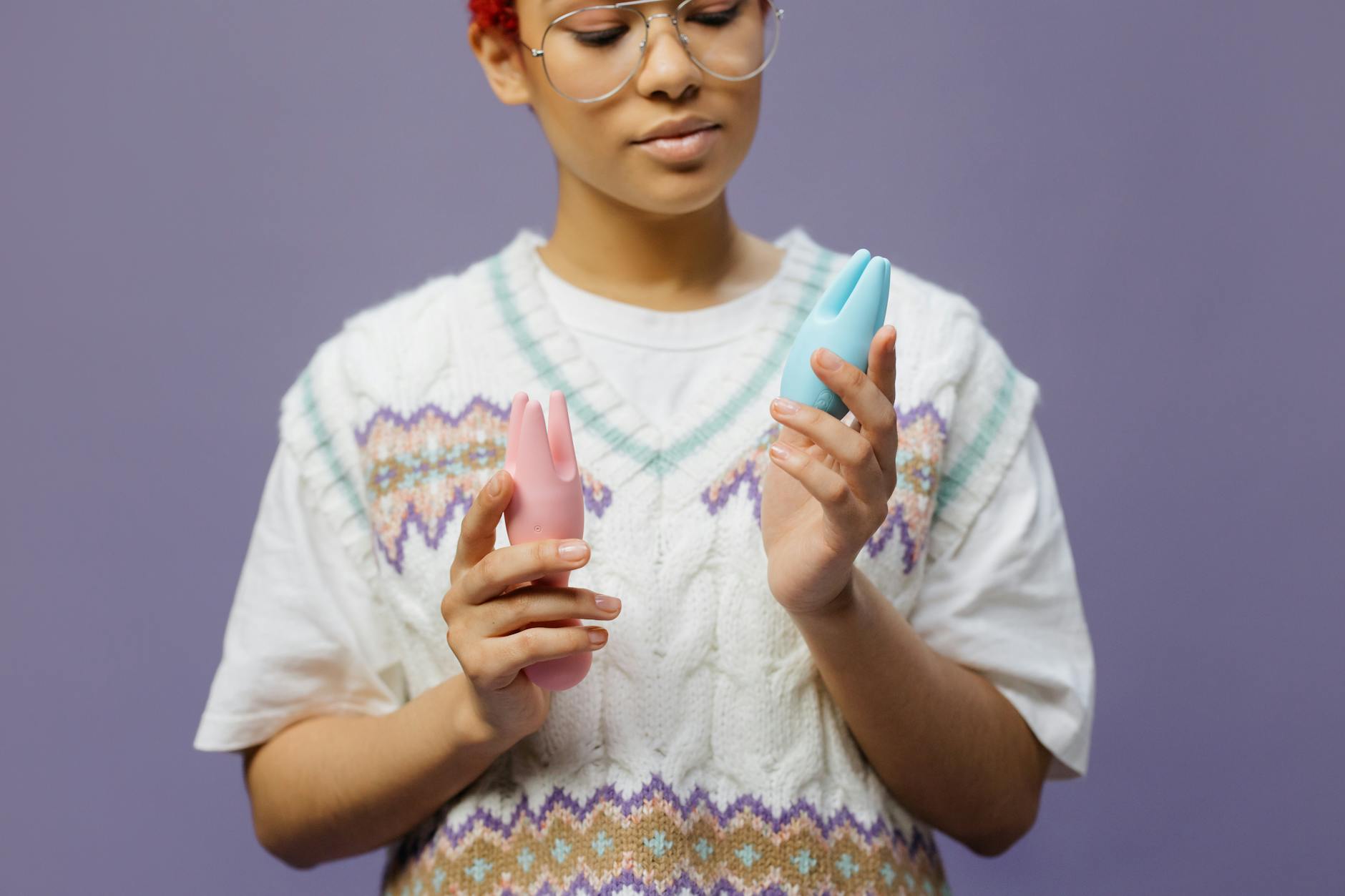
The awkward conversation nobody wants to have
Here's the thing about partner intimidation and toys. It's rarely about the toy itself. It's about what your partner thinks the toy means. Does it mean you're not satisfied with them? Does it mean they're not enough? Does it mean they're supposed to use it and they'll do it wrong?
The silence around these questions is where the problem lives.
Why partners get nervous about vibrators
Most people grow up believing their body alone should be "enough" to pleasure a partner. Introducing a vibrator can feel like introducing evidence that they're not. That's not rational, but emotion rarely is, and this particular anxiety runs deep.
Your partner might also feel:
- Performance pressure. If they hold the toy, they're suddenly responsible for "doing it right." What if the angle is wrong? What if they hurt you? What if it doesn't work and they feel like they failed?
- Loss of control. A vibrator changes the dynamic. Suddenly there's something else in the equation. That can feel unsettling if they're used to being the primary source of stimulation.
- Embarrassment. Some partners have never touched a vibrator, never discussed toys in a previous relationship, and genuinely don't know what's normal. Admitting that feels risky.
- Rejection fears. Deep down, some worry that asking about this means you're unhappy with them sexually, and that's terrifying.
None of these fears are actually about the lemon vibrator. They're about vulnerability and what they think the vibrator represents about your relationship.
Why lemon vibrators specifically reduce that friction
A lemon clitoral vibrator like the Lem works differently than other toys. It's not penetrative. It's not something that "replaces" partnered touch. Instead, it augments it. That distinction matters emotionally as much as physically.
When your partner holds a lemon vibrator, they're not being replaced. They're being invited in. The toy becomes something you're experiencing together, not something you're using despite them.
Lemon sucking vibrators also feel less intimidating because they're smaller, lighter, and more intuitive to use. There's less guesswork about angle or pressure. A partner can hold it, notice what response feels good, and adjust in real time. That participation reduces the "I'm doing this wrong" anxiety significantly.
The framing conversation that changes everything
Let's be honest. You can't hand your partner a lemon clitoral vibrator and expect them to be instantly comfortable. The conversation before the toy matters more than the toy itself.
Here's how I'd frame it:
"I want to try something together that might feel really good. It's not because anything is wrong. It's because I think we could both enjoy it. I'd like you to be part of it." That's it. You're not saying the vibrator is better than them. You're saying you want to experience something as a team.
If they ask what it does, explain without overselling. "It's a small vibrator that feels amazing on my clitoris. I'm curious how it would feel if you were the one holding it." Direct, not defensive.
If they seem hesitant, name what you're sensing. "I get the feeling you're nervous. Can we talk about that?" Most of the resistance melts when it's not a secret anymore.
How to actually introduce it together
Timing matters. Don't pull out the lemon vibrator mid-foreplay as a surprise. Set aside time when you're both relaxed and curious, not rushed or performance-focused.
Start with your partner simply watching while you use it on yourself. This serves multiple purposes. First, they see that you know how it works and it feels good. Second, they get to watch your pleasure without pressure. Third, they start building comfort with the object itself.
After a few minutes, invite them in. "Want to try holding it?" Some will say yes immediately. Some will need time. Both are fine.
When they do hold it, give specific feedback. "A little slower." "Right there." "I like that pattern." This gives them data instead of letting them spiral into "am I doing this right?" The feedback becomes a conversation instead of a judgment.
The first time won't be perfect. It probably won't even feel as good as when you use it yourself. That's normal. The pleasure isn't the only point. The participation is.
What changes when they feel genuinely included
Once your partner gets comfortable holding a lemon vibrator, something shifts psychologically. They stop seeing it as a replacement and start seeing it as a tool you share. They also start learning your body more precisely because they're paying attention to what makes you respond.
That attention is the opposite of replacement. It's actually a deepening.
Many couples I've worked with find that introducing toys this way creates a bridge to other conversations they've been avoiding. If you can talk about vibrators, you can talk about timing, about what you actually want, about desires you've been keeping secret. The toy becomes a gateway to honesty.
Partners also report feeling proud when they figure out the right angle or speed that makes their partner respond. That's genuine pleasure, not competition.
The boundary-setting piece (don't skip this)
Here's what I see go wrong. One partner introduces a toy, the other gets comfortable, and then the toy becomes expected every single time. That can actually flip the dynamic into something uncomfortable for the person who brought the toy in the first place.
You get to decide when you use it. Sometimes you want the vibrator and your partner's touch together. Sometimes you want the vibrator alone. Sometimes you don't want it at all. All of those are valid, and your partner needs to know that from the beginning.
"I'm excited to explore this together, and I also want us to keep other things we do." That's reasonable. That's also the conversation that prevents resentment from building.
Why this matters for long-term intimacy
Right now you're probably thinking this is about orgasms. It's really about permission. When your partner learns to be comfortable with your pleasure in all its forms, including vibrators, they're learning to prioritize what you actually want over what they think they should provide. That's the real win.
That shift extends beyond the bedroom. It means they're learning to listen to you instead of guessing. It means they trust you to know your own body. It means they're brave enough to let go of the idea that they alone should be enough, and instead understand that wanting more is healthy, not a rejection.
A lemon clitoral vibrator in the hands of a partner who understands they're invited to participate isn't a threat. It's evidence that your relationship is secure enough to grow.
FAQ
What if my partner says no to using a vibrator together?
Respect that. But also check in about why. Is it a firm no, or a nervous no? Sometimes people need time to warm up to the idea. You can revisit the conversation in a few months without making it a bigger thing than it is. If it's a firm philosophical no, you'll need to decide whether using toys alone is something you're comfortable with, or whether this is a bigger compatibility issue worth exploring with a therapist.
Can I use a lemon vibrator on my partner's body?
Absolutely. Lemon suckers aren't gender-specific. Many people with penises find them incredible on the frenulum or shaft. The conversation and consent are the same. "I'd like to try something on you" sets the tone, and their feedback guides you. You're still building that shared comfort together.
What if my partner feels embarrassed the first time they hold it?
Embarrassment usually passes faster than you think, especially if you stay relaxed and treat it as no big deal. "Here, hold this." Not "I hope you're ready for this moment." The more you normalize it, the faster the awkwardness fades. Humor helps too. "Well, this is new," said lightly, can break the tension immediately.
Is it normal for this to feel vulnerable?
Completely. You're letting your partner into something intimate in a new way. You're also inviting them to see you want more pleasure. That's exposure. Most people feel vulnerable the first time. It usually transforms into closeness pretty quickly once you're on the other side of it.
How do I know if the Lem is the right toy to start with?
Lemon clitoral vibrators like the Lem are actually ideal starter toys for couples because they're intuitive, they don't require deep insertion, and they're quiet. If your partner is already nervous, you want a toy that feels low-stakes to handle. The Lem fits that brief. You might also check out our buying guide for lemon sexual toys if you want to explore other options together.
What if I want to use the vibrator but my partner doesn't want to hold it?
Then you use it while they're present and involved in other ways. They can touch you somewhere else. They can watch. They can talk to you. Partnership doesn't require them to hold the toy. It just requires them to be okay with you using it and to stay engaged with you while it happens. That's a perfectly valid compromise.
The next step
If you're nervous about this conversation, start small. You don't need to have the whole thing at once. Bring it up casually. "I've been thinking about trying something," is enough. Let them ask questions. Answer honestly. And give them permission to feel whatever they feel about it.
Your partner wanting to participate in your pleasure is already a huge win. The lemon vibrator is just the tool that helps you both get there. The real intimacy is in the conversation.