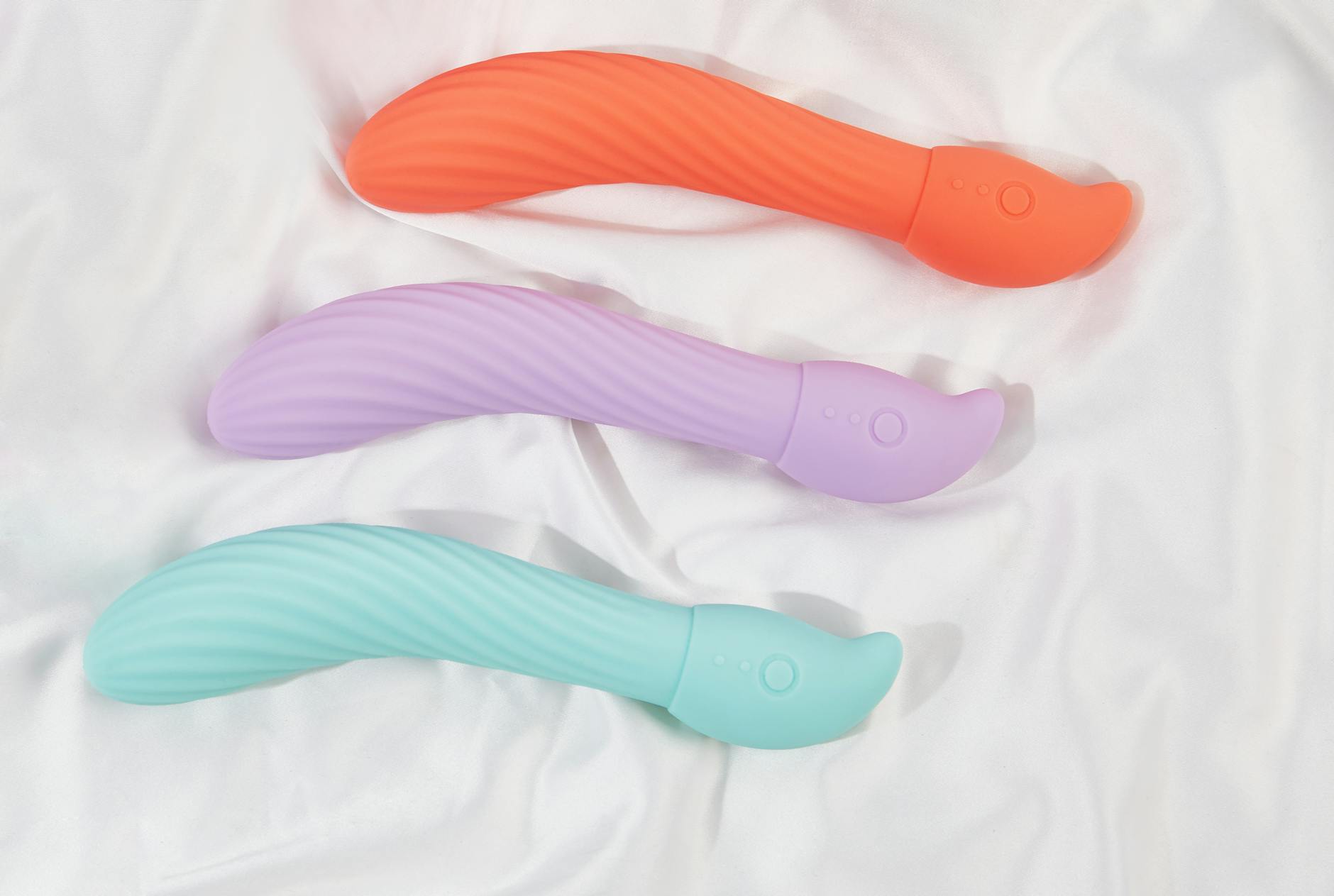
Let's talk about what's actually different
You're standing at the toy aisle (or browser, more realistically) and seeing words like "suction," "air-pulse," and "vibration." They sound like they should mean the same thing. They don't. The difference between a lemon clitoral vibrator and a traditional vibrator isn't just marketing spin. Your body will feel the distinction immediately.
Most first-time buyers assume all toys work the same way: turn it on, intensity goes up, feelings happen. That's not inaccurate, but it's incomplete. How a toy creates sensation matters as much as how strong it is.
What traditional vibrators actually do
A conventional vibrator works by oscillating back and forth at high speed. Think of it like a tiny jackhammer for your clitoris. The motor vibrates horizontally or vertically, and that vibration transmits directly through the silicone or plastic to your skin.
Traditional toys come in roughly three shapes: wand vibrators (the big ones with broad heads), bullet vibrators (small, concentrated, easy to point), and insertable vibrators (designed for internal use, though people use them externally too). The intensity levels are usually simple: low, medium, high. Some have patterns.
What they do well: they're straightforward, they start working immediately, and because the sensation is familiar (close to the feeling of an electric toothbrush on low speed), there's zero learning curve. You turn it on and you know what you're getting.
What they miss: the suction mechanism doesn't exist. You're getting pure vibration, which travels through the tissue and can, for some people, feel fatiguing or numb after 10 minutes. It's also louder, more obviously a machine, and the sensation is the same whether you're new to toys or you've used them for years.
What lemon vibrators do differently
A lemon clitoral vibrator uses air-pulse suction. Instead of shaking back and forth, the toy creates a gentle vacuum seal around your clitoris and pulses that seal rhythmically. It's less like a jackhammer and more like someone rhythmically sucking on a straw.
The technology was originally developed for therapeutic purposes (think breast-feeding support devices), and sex toy manufacturers realized it created an entirely different sensation than vibration. That realization changed the game for a lot of people.
With a lemon vibrator, the sensation is more localized. It's pulling up and releasing, up and releasing. The intensity does increase, but it never feels like pure motor force. It's gentler on the tissue itself, which is why they're often recommended for people with sensitivity or numbness. The sensation is also quieter and less obviously "toy-like," which matters if discretion matters to you.
The catch: the learning curve is real. Your first try with a lemon vibrator might feel weird or too gentle or not like "enough" if you're used to traditional toys. That's not a sign it's not working. It's a sign your body hasn't yet mapped what suction feels like.
Intensity: they're not the same animal
Here's where first-time buyers get confused. A traditional vibrator has a "power level" you can measure in hertz (vibrations per second). A high-power wand might hit 8,000 Hz. Lemon vibrators have intensity levels too, but they're measuring something different: the strength of the suction pulse.
If you compare them side by side on paper, a traditional vibrator looks more powerful. In practice, it's comparing apples to lemons. A medium-intensity lemon clitoral vibrator can create sensations as intense as or more intense than a high-power traditional vibrator, but the sensation is fundamentally different. It's not "stronger vibration." It's a different mechanism entirely.
For first-time users, this matters because you might assume "I want something gentle, so I'll start with a traditional toy on low." You might also assume "I want something intense, so I'll get a traditional toy on high." Neither assumption accounts for the fact that lemon vibrators and traditional vibrators speak a different language to your nervous system.
The physical comfort factor
Traditional vibrators can be agitating, especially if your clitoris is sensitive or if you've been numbed by years of vibration. The persistent oscillation also means you're less likely to want to use it for extended sessions. Your tissue gets tired.
Lemon vibrators distribute force differently because suction is pulling sensation inward rather than shaking from side to side. Most people can use them longer without fatigue. You're also less likely to experience that "buzzing out" sensation where the vibration becomes so constant that you stop feeling it.
That said, traditional vibrators are often smaller and more portable. If you're traveling or want something you can slip into a bag, many traditional bullet vibrators are more discreet than a Hello Nancy lemon vibrator.
Noise level is genuinely important
Traditional vibrators are loud. A high-power wand sounds like an electric toothbrush. A bullet on high setting sounds like an angry mosquito. Lemon vibrators use air-pulse technology, which is significantly quieter. You'll hear a subtle pulsing sound, but it's nothing like the motor noise of a traditional toy.
If you live with roommates, share a wall with neighbors, or have kids who might walk in, noise matters. It's not trivial.
The learning curve question
First-time users with traditional vibrators typically feel sensation immediately. You turn it on, and your body knows what to do with the input. It's familiar in a weird way because it's similar to other sensations you've already experienced.
First-time users with lemon clitoral vibrators often need a few tries. The suction sensation is new. Your nervous system has to learn what to do with it. Some people have an "oh wow" moment in the first 30 seconds. Others need three or four sessions before the sensation clicks. Neither is normal and neither is abnormal. It's just how new sensations work.
For that reason, I usually recommend that absolute beginners who are nervous about anything unfamiliar start with a traditional vibrator to build confidence, then experiment with a lemon vibrator once they know their body responds well to toys generally.
However, if you're someone who has used traditional toys and found them numbing or unsatisfying, jumping straight to a lemon vibrator makes total sense. You're not a beginner with toys. You're a beginner with this specific mechanism.
Partner considerations
If you're using a toy with a partner for the first time, noise and discretion matter. A traditional bullet vibrator is often less intimidating because it's smaller and looks less "device-like." A lemon vibrator is more obviously a toy, and the suction sensation is unfamiliar to someone who hasn't experienced it.
If your partner is nervous, using a traditional toy first and then introducing a lemon vibrator after they've seen how much pleasure it creates for you can work well. Alternatively, if your partner is curious and engaged, the novelty of a lemon vibrator might actually be more interesting because it's so different from what they'd expect.
Price and durability
Traditional vibrators range from $20 to $150 depending on brand and features. You can find decent ones at the lower end. Lemon clitoral vibrators typically cost more ($65 to $99) because the suction technology is more complex to manufacture. They also tend to last longer because they don't rely on a motor running thousands of times per second.
If budget is your primary concern, a traditional vibrator lets you experiment cheaply. If you want something you'll use for years and that's less likely to feel repetitive, a lemon vibrator is the investment.
Making the actual choice
Choose a traditional vibrator if you want immediate, intuitive sensation with zero learning curve and minimal cost. You get results the first time. Choose a lemon clitoral vibrator if you're willing to experiment, if you have sensitivity or numbness concerns, or if you want a sensation that feels less like a machine and more like another person.
Honestly? You don't have to pick one and stick with it forever. Plenty of people use both. A traditional vibrator for quickies, a lemon vibrator for extended sessions. A bullet for travel, a lemon vibrator for focus. Your pleasure isn't a binary choice.
What first-time users actually say
I work with couples and individuals exploring toys for the first time. Here's what I hear most often: people who start with traditional vibrators say "This is nice, I get results," and then try a lemon vibrator and say "Oh. That's completely different." People who start with a lemon vibrator say "It felt weird for three tries, and then it was incredible." Almost nobody regrets having both.
Frequently asked questions
Do lemon vibrators work if traditional vibrators never did?
Sometimes, yes. If a traditional vibrator felt numb or unsatisfying, it might be because your body responds better to suction than to vibration. It's not a given, but it's worth trying. The mechanism is different enough that you might discover sensation you didn't know was possible.
Can I use a lemon vibrator if I've never used any toy before?
Yes, but be patient with yourself. The first session might feel awkward or not like "enough." That's normal. Give it three tries before deciding it's not for you. Your body is learning a new sensation, and that takes a minute.
Are lemon vibrators better for sensitive clitorises?
Often, yes. The suction mechanism distributes force more gently and across a broader area than a vibrator's direct oscillation. But "sensitive" means different things to different people. If your sensitivity means "easily overstimulated," yes, a lemon vibrator is usually better. If it means "I need strong sensation quickly," a traditional vibrator might serve you better.
Why are lemon vibrators more expensive?
The suction technology is more complex to engineer and manufacture than a simple motor. They also tend to have longer lifespans and more durable batteries because the motor isn't working as hard. You're paying for both the mechanism and longevity.
Can I use both types with a partner?
Completely. A lemon vibrator during foreplay, a traditional vibrator during penetration, or vice versa. Your partner might prefer the control and simplicity of a traditional toy, or they might love the novelty and intensity of a lemon vibrator. Communication about sensation, not just about which toy to use, matters more.
What if a lemon vibrator feels weird forever?
Not everyone loves suction. Some people's bodies just respond better to vibration. That's okay. You tried something, learned something about yourself, and moved forward. Pleasure isn't about forcing yourself to like something because it's trendy. If a traditional vibrator has always worked for you, that's legitimate. Stick with what feels good.
The real takeaway
First-time users have options now. A lemon clitoral vibrator isn't better than a traditional vibrator. It's different. The mechanism is different, the sensation is different, the learning curve is different, the noise is different.
Choose based on what matters to you: immediacy, sensitivity, noise level, budget, or novelty. And know that "choosing" doesn't mean foreclosing the other option forever. Your pleasure isn't a one-toy situation. It grows and evolves, and so does your toolkit.
If you're still unsure which direction makes sense for your body and your situation, reach out. We're here to help you figure out what will actually work for you, not what works for someone else's body or someone else's life.